Logo Roy Kim, MD
San Francisco Plastic Surgery

call us at 415.354.8148

220 Montgomery Street, suite 348
San Francisco CA - 94104

Receive personalized information today!

Search

Any Concerns About Mammograms After Breast Augmentation Surgery?

1
Jul

Woman Getting a Mammogram

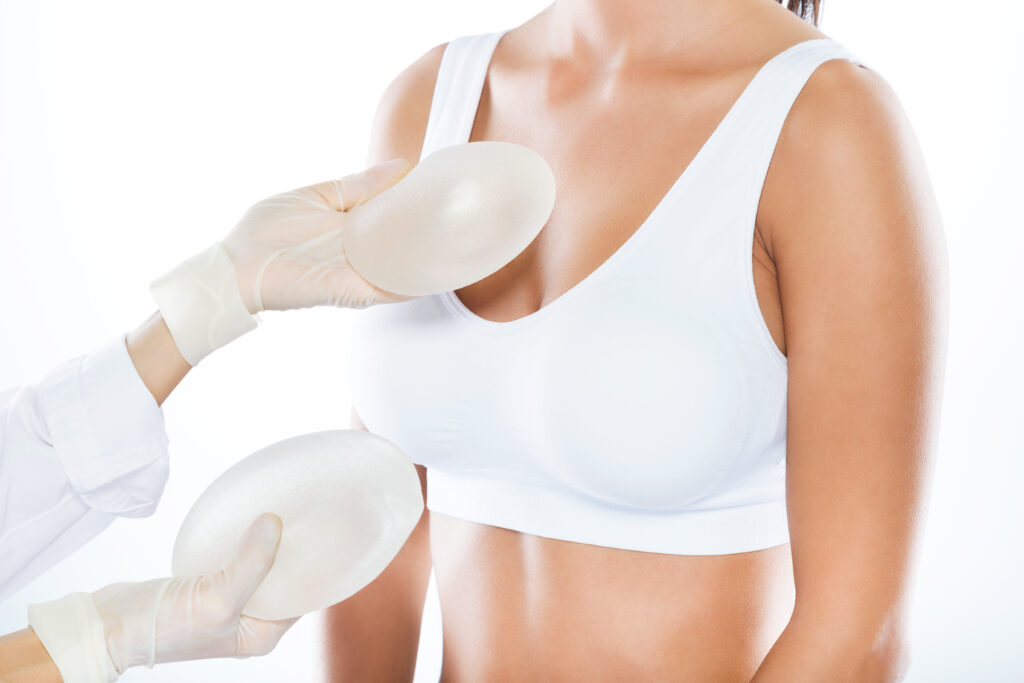
Mammograms are vital test to detect breast cancer. The earlier you can detect breast cancer, and the smaller the problem, the higher chance of long-term health and success. After a breast augmentation, you should still get a mammogram. It's also safe for your breast implants!

Mammograms are usually done by compressing the breast tissue, and then taking pictures of your breasts. With any type of breast implant, the compression should not cause your implants to rupture. It requires much more force than just a mammogram to rupture a saline or silicone implant, above or below the muscle, regardless of the age of the implant.

Breast augmentation may actually help the visualization of the breast tissue. Breast implants are often placed UNDER the muscle, pushing the breast tissue forward. Theoretically, this pushes more breast tissue forward, allowing the picture from the mammogram to encompass more breast tissue in the image.

Make sure to tell the technician that you have breast implants. The mammogram technician may need to use a different angle, or the "Eklund" technique, get the best breast picture possible with the mammogram machine.

Your should talk to your family doctor about when you should get a mammogram. Guidelines differ based on your personal health history, your family history of relatives who have had breast cancer, and ACS/ America Cancer Society recommendations versus the Federal Government. If you happen to live outside the USA, then your country's guidelines may differ from USA recommendations. You can rest assured that most mammogram technicians can get a great picture of your breast tissue with a mammogram.

The “Eklund” technique is a pretty obscure and geeky thing to know about, so an introductory article is here.  You will have to sign up for an account to read this article.

http://www.medscape.com/viewarticle/462442_4

Information on mammograms from the American College of Radiology is found here-

http://www.radiologyinfo.org/en/info.cfm?pg=mammo

View Comments

What is the Best Type of Facelift for You?

30
Jun

Measuring Woman's Face With Ruler

Mini-lift? Normal Facelift? Necklift with a Facelift? Behind the ear incision? Do you want fries with that?

There is a lot of confusion about what a facelift is exactly. This article will hopefully help you to decide what surgical facelift is best for you.

There is no one-size-fits-all facelift. The variables include what you want, your facial anatomic structures, how much time off of work and life you can devote to recovery, and whether you can commit to a long-term plan of facial skin care and protection.

The most important factor is what you want. You should be able to communicate what exactly on your face you want tightened or rejuvenated. You may not be able to articulate all of the medical terms, but a good rapport with your plastic surgeon should be able to establish your parameters. During your consultation, your plastic surgeon should be able to tell you what is reasonable and achievable, and what is not.

Your personal facial structures, as well as how you have aged, will determine what you want and may enhance or limit what is possible through surgery. For example, sun damage and smoking will accelerate aging, so you may need more surgery or a facial skin rejuvenation procedure to get the best results possible. Your wishes to achieve the most aggressive rejuvenation, a more natural result, a wish to highlight a certain feature of your face- all of these ideas and thoughts will help your plastic surgeon come up with the best individualized plan for you.

How much time you can devote to recovery also helps to determine what facelift is best for you. The most rejuvenating facelift may often result in more surgery, more swelling, and longer recovery. A more limited incision, or less fat grafting, or fewer procedures, may offer you a more reasonable recovery time, given your time constraints. Fat grafting is a wonderful option for facial rejuvenation, but will require liposuction from some area on your body as well as more swelling in the areas of your face that require fat grafting. After coming up with an individualized plan, you can discuss with your plastic surgeon the best options for you.

A long term commitment to maintaining your facelift results is also necessary for your plastic surgeon to determine what is best for you. Despite a great surgical result, you are still responsible for sun protection, no excessive tanning, and other facial skin care treatments to maintain your result. Discuss this during your consultation as well, because your lifestyle after surgery may affect what procedures will be done along with your facelift.


Should you desire more information about my available services, or want to schedule an appointment, please contact my Patient Care Coordinator at info@drkim.com, or call our office at 415-362-1846.

Did you find this article interesting?  Please share via Twitter, Facebook or Google Plus below.

View Comments

How To Get the Best Possible Scar After Any Plastic Surgery Procedure

29
Jun


To get the best aesthetic scar after surgery, it's important to remember the following.

Follow Directions

-  Plastic Surgeons are trained to make scars look as nice as possible.  Listen carefully to instructions on how to care for your scars right after your procedure

Allow your scar to form new skin

-  Right after surgery, scars heal and re-epithelizalize, which is a fancy term for growing new skin.  It may take 1-3 weeks for your scar to form completely new skin, but it's important to simply allow your body to do that before considering any scar enhancing products.  Antibiotic ointments such as Bacitracin or Neosporin may also be recommended during this phase.

Realize that scars mature over a long period of time

-  Scar undergo a maturation phase for 6-12 months after surgery.  Non surgical treatment is typically effective within the first 6-12 months after creation of the scar, and this is when non-surgical scar enhancers such as silicone gel bandages, hydrocortisone, cortisone injections, and protection from the sun will help with the long-term appearance of the scar.

Follow-up is very important

-  If your plastic surgeon doesn't know you're unhappy with your scar appearance, then he/ she will be unable to recommend any non-surgical enhancing product during the scar maturation phase which can help with your scar appearance.  Cortisone injections may be very helpful to make your scar appear more aesthetically pleasing, but this is essentially impossible to do on your own.   You'll need to see your plastic surgeon to get this done.

Realize that everyone's skin is different

-  Your skin and body may heal differently than your sister, brother, Mom, Dad, or your best friend.  Despite your best efforts, your scar may be unsightly.  Don't despair-  non-surgical treatments will work within a specified time period after surgery.  If you wait too long, then you may need scar revision, a minor surgical procedure to actually cut out the scar and scar tissue.


Should you desire more information about my available services, or want to schedule an appointment, please contact my Patient Care Coordinator at info@drkim.com, or call our office at 415-362-1846.

Did you find this article interesting?  Please share via Twitter, Facebook or Google Plus below.

View Comments

Is a Non-Surgical Nose Job Possible?

28
Jun

Woman with feather

What exactly is a non-surgical nose job? In a nutshell, it's dermal filler injected into the nose, so that you can have more filling or volume in certain areas.

There are many dermal fillers, but the more popular ones seem to be Juvederm or Restylane. This is technically an off-label use of any FDA approved dermal filler. I'm unaware of any dermal filler currently FDA approved for the nose. Many dermal fillers are FDA approved for the face, especially the nasolabial folds, or parentheses lines around the mouth.

So, a non-surgical nose job, or dermal filler to the nose, can be injected as follows

As a primary nose job or procedure- if you've never had any surgery or procedure done to your nose before, it's a great way to do a dry run before surgery and see what altering it will do. Typically it's injected into the bridge of the nose, or nasal dorsum, to fill it out. You can also get it injected into different areas of the nose, such as the tip or the sides. Since Juvederm and Restylane are HA fillers (hyaluronic acid), they will eventually fade after about 9-12 months.

As a secondary touch-up after a nose job, to fill in any areas that lack volume

HA fillers (hyaluronic acid fillers), such as Juvederm or Restylane, are actually reversible. So, if you're not happy with the way it looks after the injection, you can have a melting agent injected to dissolve your Juvederm or Restylane.

You can start off with shorter acting HA filler, such as Juvederm or Restylane, versus going to Radiesse, Artefill, or another longer-lasting dermal filler, to see what your results are. This is also a good strategy before getting a surgical nose job, so that you can see what you may look like before committing to surgery.

You, as a patient who is NOT asleep, can provide input into what your nose looks like. Although you may be able to see before and after pictures, as well as undergo software imaging, a dermal filler injection in the office allows a more collaborative effort between you and the plastic surgeon.

You can come back and get multiple injections, so that you can see if you need more dermal filler long-term or not. You're not under any obligation to get more than 1 syringe, but you always have the option long-term.

A non-surgical nose job is not anything to take lightly, even if it is only an office procedure. You want to think about your options and carefully choose who your injector is.


Should you desire more information about my available services, or want to schedule an appointment, please contact my Patient Care Coordinator at info@drkim.com, or call our office at 415-362-1846.

Did you find this article interesting?  Please share via Twitter, Facebook or Google Plus below.

View Comments

SUNDAY LOUNGE-June 27th, 2011-Heat Miser, from "The Year Without A Santa Claus"

27
Jun

When it grows long, I often think that I look like the "Heat Miser" from the classic "The Year Without a Santa Claus". You may wish to shield your young children before viewing this video. June 27th, 2011.
 

Read more >>

View Comments

SATURDAY SHOUT OUT-June, 26th, 2011-Patrick Evan Salon

26
Jun

This week's Saturday Shout Out goes to Patrick Evan Salon. June 26th, 2011.

Read more >>

View Comments

How Long Will Nipple Sensitivity Last After Breast Augmentation?

25
Jun

The nerves are going to feel what they want to feel while they are healing. Fortunately, these feelings go away usually 1-3 months after your procedure. In theory, it can take 6-12 months for these feelings to subside, and also theoretically, these feelings may never subside, but this is very rare.

Read more >>

View Comments

What is the One Thing You Have to Tell Your Doctor Before Getting an Eyelid Lift?

24
Jun

close up of a woman's eye marked for plastic surgery

Short Answer-

DRY EYES!

Long Explanation-

If you have dry eyes before your eyelid lift surgery, then you may continue to have dry eyes that remain the same or may actually get worse after your eyelid surgery.

Dry eyes is a common symptom in older patients- the exact type of patient who considers eyelid lift surgery. Right after your operation, because the loose eyelid skin is tightened, your eyeball, or globe, will be even more exposed to the air than usual. This contributes to dry eyes immediately after surgery.

Usually, it takes years for your eyelid skin to slowly loosen and form hooding. This actually helps your eyeballs to retain moisture. Since surgery is fairly fast in comparison to developing loose skin, your eyes may have immediate low-grade irritation and worsening symptoms of dry eyes right after your eyelid lift procedure.

However, if you're prone to dry eyes even with loose eyelid skin covering your eyeball, you may just naturally lack enough tear production to keep your eyeballs moist. You may need a Schirmer's test, which is a special eye test that measures tear production. If you have naturally dry eyes, and get an eyelid lift, you may end up with even more irritation from dry eyes and lack of tear production that is actually worse than before surgery.

There is a solution if you persist in having dry eyes- Restasis, a prescription medicine that combats dry eyes. However, it is much better to know ahead of any eyelid lift surgery that you have dry eyes, because there may be other non-surgical options or eyelid lift modifications to avoid having worsening dry eyes long-term.


Should you desire more information about my available services, or want to schedule an appointment, please contact my Patient Care Coordinator at info@drkim.com, or call our office at 415-362-1846.

Did you find this article interesting?  Please share via Twitter, Facebook or Google Plus below.

For more information on a Schirmer's test, please go to http://en.wikipedia.org/wiki/Schirmer%27s_test.

For more information on Restasis, please go to www.restasis.com.

View Comments

Closed versus Open Rhinoplasty- Which One Is Better?

23
Jun

It depends completely on what surgical maneuvers you need or want to have accomplished with your nose job. A closed rhinoplasty should have less swelling and quicker healing. However, most plastic surgeons are only willing to do a closed rhinoplasty for limited procedures.

Read more >>

View Comments

6 Ways To Protect Your Skin This Summer

22
Jun

Here are 6 helpful hints on maintaining your youthful skin...

Read more >>

View Comments
  • American Board of Plastic Surgery
  • American Aesthetic Society of Plastic Surgery
  • American Society of Plastic Surgeons
  • Real Self