
Does Getting Stitches Removed After Plastic Surgery Hurt? A San Francisco Plastic Surgeon Explains
Overview
Suture removal is one of the least painful parts of the entire plastic surgery process. Most patients describe it as a mild tugging sensation, not pain.
For a typical facelift with dozens of sutures, the whole thing takes 10 to 15 minutes. You'll spend longer finding parking on Sutter Street.
Plastic surgeons use permanent sutures near the skin surface because they produce the least tissue reaction, but the trade-off is they need to come out in the office.
The anxiety leading up to suture removal is almost always worse than the removal itself.
1. The Anxiety Is Almost Always Worse Than the Actual Removal
Patients build up suture removal in their heads for days, and I get it. You made it through surgery, you survived recovery, and now someone is coming at your healing incisions with scissors and forceps.
But here's what your brain is getting wrong. It still files the surgical area under "danger," so anything touching those incisions triggers an alarm. By the time sutures come out a week or two later, the tissue has healed enough that the nerve endings aren't firing the same way. I had a Cow Hollow patient last year, classic type-A personality, who gripped the armrests so hard her knuckles went white before I even picked up the scissors. Thirty seconds in, she looked up and said, "Wait, you started?" After 25 years, that reaction is the rule, not the exception.
2. What Suture Removal Feels Like (From Patients Who've Been Through It)
Think about pulling a single hair off your arm. For most patients, suture removal registers right around that level.
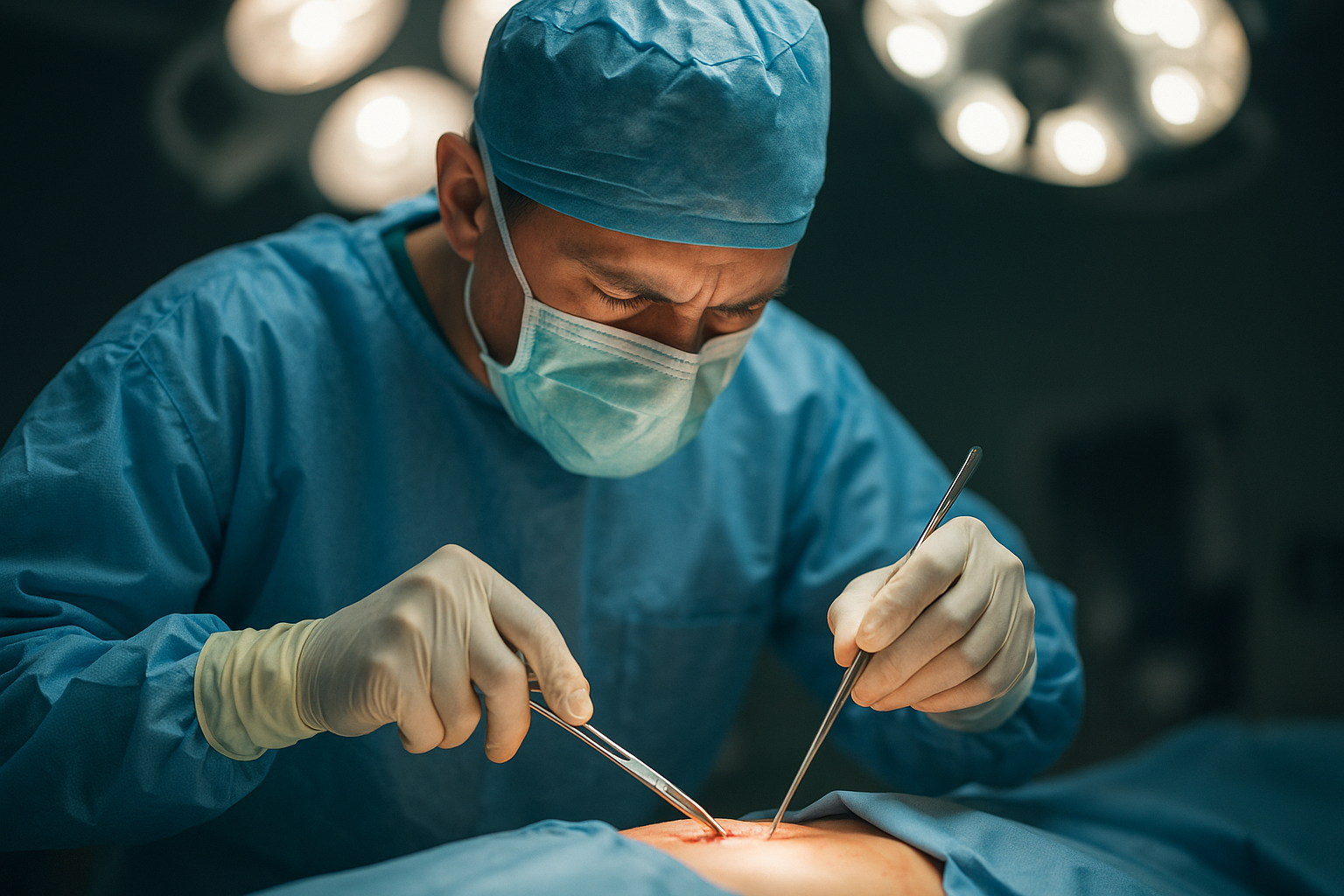
I snip the suture close to the skin with fine-tipped scissors, then slide the thread out with forceps. Each one takes a few seconds. The snip itself produces no sensation at all. The sliding-out part is where you'll notice a brief, mild tug. Different areas feel slightly different:
Eyelid sutures (after blepharoplasty): produce more anxiety than actual discomfort, mostly because patients are nervous about instruments near their eyes [LINK: Blepharoplasty Recovery: What to Expect]
Breast and body procedure sutures: less noticeable because the skin is thicker [LINK: Breast Surgery Recovery Guide]
Facial sutures (facelift, necklift): fall in the middle, but patients are still surprised by how mild it is [LINK: Facelift Recovery Timeline]
3. Why Plastic Surgeons Use Permanent Sutures (and Why You Need a Removal Appointment)
I hear this one a lot: "My friend had surgery and she never had to get her stitches removed. Why do I?"
For external incisions, I use permanent sutures on purpose. Permanent material causes the least tissue reaction, which translates directly to less scar formation. Your body pretty much ignores it while the incision heals. The trade-off is an office visit to remove them, but better scars are worth the 15-minute appointment.
Absorbable sutures sound more convenient, and they are, on paper. The problem is your body has to actively break down that material, and the process triggers inflammation right at the skin surface. More inflammation, more scar tissue. I reserve absorbable sutures for the deep internal layers where scarring stays buried, and use permanent material on the outside where you'll see the result for years.
4. How Suture Material Affects Your Removal Experience
Not all threads feel the same coming out, and the difference is noticeable.
Prolene (monofilament) is my go-to for most external closures. Smooth, non-braided, almost zero friction against the tissue. When I pull it, the thread slides right out. Patients barely register it.
Braided sutures have a woven texture that gives surrounding tissue something to grip during healing. More friction on removal. Still not painful, but you'll feel the difference compared to Prolene.
I'd rather spend the extra few dollars on Prolene and have you barely notice the removal. The suture material I pick for your external closure affects both your scar quality and how your removal appointment feels, so it's not a trivial choice.
5. The Suture Removal Timeline by Procedure
When sutures come out depends entirely on the procedure and the anatomy involved. Leave them in too long and you get unnecessary scarring. Take them out too early and the incision doesn't hold.
Eyelid surgery (blepharoplasty): 5 to 7 days. Eyelid skin heals fast because of its excellent blood supply. [LINK: Blepharoplasty: Upper and Lower Eyelid Surgery]
Facelift and necklift: 7 to 10 days, sometimes in stages. Sutures near the ears often come out first, with others following a few days later. [LINK: Facelift Surgery: What You Need to Know]
Breast surgery: 7 to 14 days depending on technique, though many breast procedures use dissolvable sutures internally so external removal is minimal. [LINK: Breast Augmentation Guide]
Body procedures (tummy tuck, liposuction drain sites): 10 to 14 days. Thicker skin needs longer to establish wound strength.
Nose surgery (rhinoplasty): External sutures at 5 to 7 days, with internal splints and packing on a separate timeline. [LINK: Rhinoplasty Recovery: What to Expect Week by Week]
6. How I Keep Patients Comfortable During Removal
Most patients need nothing. No numbing cream, no ice, no medication. For the occasional patient who's genuinely worked up about it, I'll apply topical numbing cream about 15 minutes before we start.
The real secret weapon is the squeeze toy. My squeeze toy of choice is a breast implant sample. Half my patients walk out of our Sutter Street office saying, "I squeezed a boob today," and ridiculous as that sounds, laughter changes the whole dynamic. A patient who's laughing isn't clenching. One of my Noe Valley regulars now asks for the implant by size. She has a preference.
[PHOTO: Breast implant squeeze toy used in office for patient comfort]
7. What to Do Before and After Your Removal Appointment
Before: Shower and gently clean the area as instructed. Clean skin makes the process faster. Eat a normal meal and skip the extra caffeine. Patients who show up jittery or lightheaded from skipping breakfast have a harder time relaxing, and it has nothing to do with the sutures.
After: Keep the area clean and moisturized per your plastic surgeon's instructions, and start scar care (silicone strips or gel) once cleared. And don't skip sun protection on the incision. UV exposure during early healing darkens scars permanently, and I've seen patients undo months of good healing with one weekend at the beach. [LINK: Scar Care After Plastic Surgery]
Myths About Suture Removal
"Suture removal is the most painful part of plastic surgery recovery." Not even close. The first 48 hours after surgery are the uncomfortable part. Suture removal is a non-event. Most patients rate it a 1 or 2 out of 10.
"Leaving sutures in longer means better healing." Opposite. Sutures left in too long create "railroad track" marks on either side of the scar from the material sitting in the skin past its ideal removal window.
"I should take painkillers before my removal appointment." Unnecessary for most patients. If you need medication for anxiety rather than pain, call the office beforehand and we'll figure it out. Popping a Vicodin for suture removal is like wearing a helmet to ride an elevator.
Frequently Asked Questions
-
A blepharoplasty with a handful of sutures takes about 5 minutes. A full facelift runs 10 to 15 minutes. You'll spend more time in the waiting room than in the chair.
-
It happens occasionally when there's crusting around the suture. A gentle soak with saline loosens it right up. In rare cases I'll use a fine needle to lift the suture loop from under healed skin, and even that is more of a brief pinch than anything else.
-
No. There's no sedation, no anesthesia, and nothing affecting your ability to drive. Even after eyelid surgery, your vision is fine immediately afterward. I have patients drive in from Castro Valley and Marin for removal appointments without a second thought.
-
This is the number one fear I hear, and it's extremely unlikely. The deep internal dissolvable sutures do the heavy lifting. By the time external sutures come out, the wound is holding itself together. I would never pull a suture if I wasn't confident the incision was ready.
-
Call us at 415-362-1846 ahead of time so we're prepared. Numbing cream before you arrive, implant squeeze toy ready, and we'll walk you through every step. I've removed sutures from patients with severe needle phobias. With the right preparation, it's always manageable.
-
Sometimes a tiny amount of spotting where the suture exits the skin. Light pressure for a minute or two handles it. We're not talking about anything requiring bandaging or a change of clothes.
Summary
Suture removal sounds much worse than it is. Once you're in the chair, it's over in minutes: a slight tugging sensation, a breast implant to squeeze if you need it, and you're done. The stitches are out, the healing continues, and you don't have to think about it again.

Schedule Your Consultation
Questions about your upcoming procedure or post-surgical care? Contact our San Francisco office at 415-362-1846 or email info@drkim.com to schedule a consultation with Dr. Kim.
Follow and Connect with me on my social media!