
How Should You Plan Your Breast Augmentation Recovery in San Francisco?
Overview
The most important part of recovery starts before your surgery, not after it.
In my experience, educated patients recover faster. When you understand exactly what to expect at every stage, you are calmer going in, you have less anxiety, and all of your questions are answered before you ever get to the operating room.
This guide covers the practical logistics of recovery, from pre-surgery prep and pain control to work, childcare, and the timeline for getting back to your normal life.
Most patients are back to desk work within 2 to 3 days, walking immediately, doing light workouts within a week, and cleared for heavy exercise at 2 to 4 weeks.
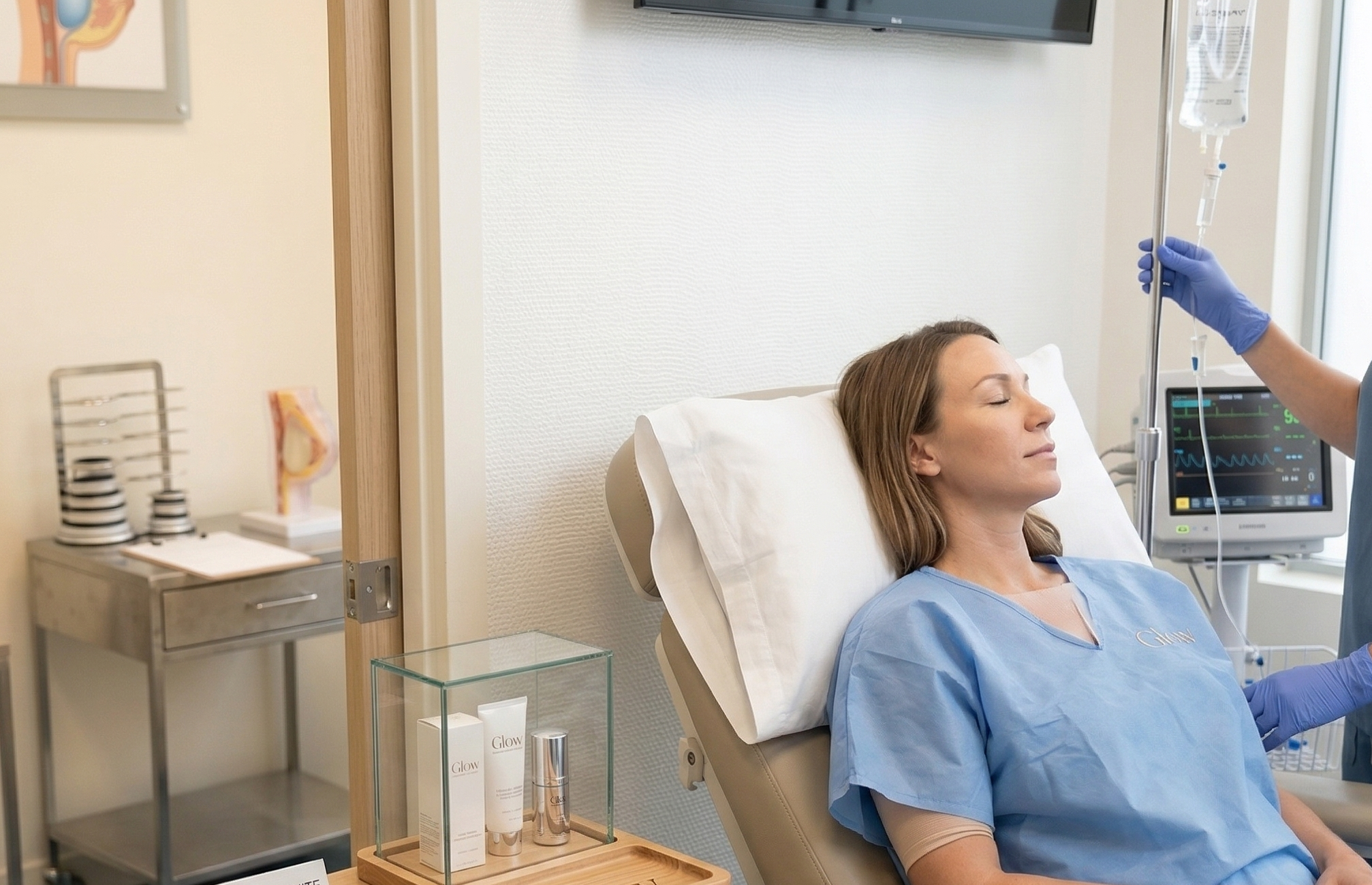
Post-op recovery area at in an office setting of a plastic surgeon
1. Work: How Much Time Off Do You Need?
If you work a desk job or work remotely, most patients are comfortable returning to computer work within 2 to 3 days. That first day should be genuine rest, but by day 2 or 3 the majority of patients feel well enough to sit at a desk, answer emails, and take calls without difficulty.
If your job involves physical labor, lifting, or extended time on your feet, plan for 2 to 4 weeks before returning depending on the demands. Many of my patients working in the Financial District or downtown San Francisco take 2 to 3 days off entirely and then work from home for a couple of additional days before going back to the office. That approach tends to work well. [LINK: What Should You Know Before Your Breast Augmentation Consultation in San Francisco?]
2. Childcare and Lifting Restrictions
If you have young children, this is the part that requires the most planning. For the first week, you should not lift anything heavier than about 10 pounds, which rules out picking up toddlers.
Arrange for a partner, family member, or caregiver to handle all lifting and carrying for the first 7 to 10 days
You are able to cuddle, read stories, and sit with your kids on the couch, which is usually enough to keep everyone happy
If your children are school-age, recovery during the school week gives you quieter days to rest
Patients from Marin and the Peninsula who have young families consistently tell me that having a full week of childcare help was the best investment they made in their recovery.
3. My Rapid Recovery Protocol: Before, During, and After Surgery
This is the framework I use for every breast augmentation patient, and it is the reason my patients consistently tell me recovery was easier than they expected.
Before surgery: education and home prep
By the time you get to surgery day, you should have zero unanswered questions. Educated patients are calmer, have less anxiety, and recover faster because they know exactly what is coming. We spend time during the consultation and pre-op appointment going through every step so nothing feels like a surprise.
On the practical side, I ask patients to prepare their home before surgery day:
Stock up on high-protein meals and snacks (your body needs protein to repair tissue efficiently)
Clear a pathway from your bed to the bathroom so you are not tripping over anything while groggy
Set out extra sheets and towels in case any post-surgical drainage needs to be washed
Have multiple ice packs ready in the freezer so you always have a cold one available for rotating
Set up your sleeping area with 2 to 3 pillows for chest elevation (more on this below)
During surgery: precise technique and long-acting pain control
I use subfascial placement (behind the fascia rather than behind the muscle), which means no muscle is cut during the procedure. Precise pocket creation is critical because it determines the implant position and how the result looks long-term. At the end of surgery, I place a long-acting numbing injectable medication that keeps the surgical area comfortable for approximately 3 days. This is the single biggest factor in why my patients report minimal pain.
After surgery: comfort and recovery management
With the 3-day numbing medication doing most of the work, the vast majority of my patients manage any residual discomfort with Tylenol (acetaminophen) alone and never fill a narcotic prescription. Several additional factors help keep pain low and recovery smooth:
Post-surgery compression bra: wearing the bra I provide helps with support, reduces swelling, and noticeably reduces discomfort
Anti-nausea management: making sure you are not nauseous is an underappreciated part of pain control, because nausea amplifies the perception of pain and makes the first day miserable if it is not addressed proactively
Elevated sleeping position: sleeping with your chest propped up on 2 to 3 pillows reduces swelling and significantly reduces discomfort during the first week
Normal arm use: because the pectoral muscle stays intact with subfascial placement, you use your arms normally from day one
[LINK: Accelerated Recovery: The San Francisco Guide to a Faster Breast Augmentation]
4. What to Wear After Surgery
Raising your arms above your head will be uncomfortable for the first week or so, which means anything that pulls over your head is out. Plan your recovery wardrobe ahead of time.
Button-down or zip-front tops are the easiest option for the first 7 to 10 days
A supportive, front-closure surgical bra (I provide recommendations during the pre-op appointment)
Loose, comfortable pants or shorts with an elastic waist so you are not struggling with buttons or zippers
Slip-on shoes, since bending over to tie laces puts unnecessary pressure on your chest in the first few days
5. Driving and Getting Around
You are not able to drive yourself home after surgery, and you should not drive while taking any medication that causes drowsiness. With the Rapid Recovery protocol, most patients are off all medication within a few days and feel comfortable driving again by the end of the first week.
For your follow-up appointments at my office on Sutter Street, plan to have someone drive you for the first visit. After that, most patients are fine on their own. If you are coming from the East Bay, Marin, or the Peninsula, having a driver for the first post-op visit avoids any stress about traffic or parking while you are still early in recovery.
6. Sleep Position and Setup
As mentioned above, sleeping with your chest elevated on 2 to 3 pillows is one of the most effective ways to reduce swelling and discomfort during the first 2 to 3 weeks. If you are a side sleeper or stomach sleeper, I recommend practicing the elevated position for a few nights before surgery so it does not feel completely foreign when you are recovering.
A wedge pillow or a recliner chair are the two most popular setups among my patients
Place pillows along your sides to keep you from rolling over during the night
7. Nutrition and Hydration
Beyond the high-protein meals you stocked before surgery, pay attention to sodium intake during the first week. High-sodium foods (most takeout and processed food) increase fluid retention and make swelling worse. Keeping meals simple, fresh, and low in salt helps your recovery stay on track. Staying well-hydrated also makes a noticeable difference in how quickly swelling resolves, so keep a water bottle within arm’s reach at all times.
8. Managing Expectations During the First Week
Around day 3 or 4, some patients experience a temporary dip in mood. This is a normal response to the combination of anesthesia leaving your system, disrupted sleep from the new sleeping position, and the reality that your results do not look final yet. The implants sit higher on the chest initially and take several months to settle into a relaxed, natural position. Knowing this ahead of time makes a real difference in how patients experience the first week.
A patient from Pacific Heights told me she almost called my office in a panic on day 4 because she thought the implants were too high. By her two-week follow-up, they had already started dropping, and by month three she was thrilled. That timeline is completely typical, and I walk every patient through it before surgery so there are no surprises.
9. Timing Surgery Around Your Calendar
If you have a specific event or trip you are planning around, work backward from that date.
2 to 3 days: most patients return to desk work and social activities that are not physically demanding
1 week: light workouts and moderate physical activity
2 to 4 weeks: heavy workouts, vigorous exercise, and wearing underwire bras
3 months: before a major event if you want your results to be close to their final shape
6 months: for full settling and the final result
10. Your Support System Matters
The best recoveries I see come from patients who have a reliable person available for the first 24 to 48 hours and a general support plan for the first week. You do not need a private nurse, but you do need someone to drive you home, check on you that first night, and help with meals and household tasks for a few days.
[LINK: What Should You Know Before Your Breast Augmentation Consultation in San Francisco?]
Myths Worth Correcting
"You will be bedridden for weeks." With the Rapid Recovery protocol, most of my patients are walking the same day, back to desk work within 2 to 3 days, and doing light workouts within a week. Extended bed rest is not necessary.
"You will need narcotic painkillers." The 3-day numbing medication I place at the end of surgery handles the window when discomfort would otherwise be at its peak. After that, the vast majority of my patients manage with Tylenol alone. Narcotic prescriptions go unfilled more often than not.
"Your results look final right after surgery." Implants take 3 to 6 months to settle into their natural position, and the early weeks involve temporary swelling and a higher implant position that is completely normal. Patience during this phase is part of the plan.
Frequently Asked Questions
-
Walking is encouraged immediately because gentle movement supports circulation and recovery. Light workouts resume around one week for most patients, and heavy exercise including upper body training and chest work typically resumes at 2 to 4 weeks. I give individualized guidance at each follow-up based on how you are healing.
-
Most patients describe it as tightness and pressure rather than sharp pain. The 3-day numbing medication covers the peak discomfort window, and after that, the compression bra, elevated sleeping, and Tylenol keep things manageable. On a scale of 1 to 10, the majority rate their discomfort around a 3 or 4 for the first two days, and it improves steadily from there.
-
Light workouts are typically fine within a week, and heavy workouts resume at 2 to 4 weeks depending on how you are healing.
-
You will need someone with you for the first 24 hours after general anesthesia, no exceptions. Beyond that, most patients living alone do well as long as they prepare meals in advance, set up their recovery area before surgery, and have someone available by phone. Subfascial placement makes independent recovery much more manageable because arm use is not restricted.
-
Implants take 3 to 6 months to fully settle into their final position, with the most noticeable changes happening in the first 3 months. [LINK: San Francisco Breast Augmentation FAQ: 15 Top Questions Answered Clearly]
-
Sleep elevated, stay hydrated, keep sodium intake low, and walk gently every day. Ice packs on the chest for the first 48 hours help as well. Following these steps consistently makes a visible difference in how quickly swelling resolves.
Summary
Recovery planning is where preparation meets results. The patients across the Bay Area who have the smoothest recoveries are the ones who arrange help, stock their fridge, set up their sleep area, and clear their calendars before surgery day. Combined with the Rapid Recovery protocol and subfascial placement, the process is shorter and more comfortable than most people expect.
Ready to Plan Your Recovery?
Call 415-362-1846 to schedule a consultation at my San Francisco office at 450 Sutter Street, Suite 1440, or at my Alameda location at 1403 Park Street. We will go over your surgical plan and build a recovery timeline tailored to your schedule.
[LINK: Redefining the San Francisco Silhouette: 5 Essentials of Modern Breast Augmentation]
Follow and Connect with me on my social media!