
Are You a Candidate for Breast Augmentation? 11 Signs for San Francisco Patients
By Roy Kim, MD, board-certified plastic surgeon | Updated October 2026
Overview
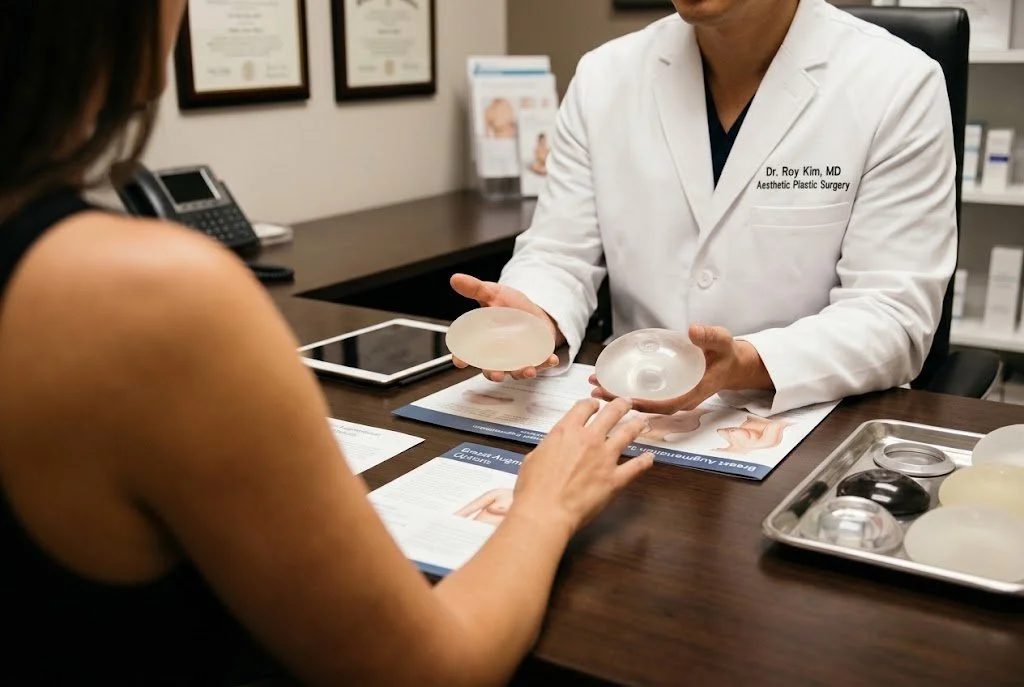
Most healthy women who want more breast size or upper fullness are good candidates for breast augmentation. An implant adds volume, but it does not replace the need for a breast lift.
Timing matters more than age.
Asymmetry and a thin frame can be accommodated with a breast augmentation
1. Are you in good general health?
Good health is the first sign. Breast augmentation is elective surgery, so an uncontrolled medical condition or an abnormal mammogram that needs follow-up comes first.
2. Do you want more size or upper fullness?
Breast augmentation adds volume to your overall breasts. However, a silicone or saline implant is often used to create fullness of the upper part of the breast.
It works for breasts that have always been small in size, and for breasts that look deflated after pregnancy, breastfeeding, or weight loss.
Fat transfer is another option if you want a modest increase without an implant. Fat grafting is also an option to improve the contours of your breast implant, or to mask the edges of your implants if you have very little breast tissue.
[LINK: Breast Augmentation Hub]
3. Is your nipple at or above the fold under your breast?
If it is, augmentation alone is usually enough. Plastic surgeons describe sagging, or ptosis, by where the nipple sits relative to that fold.
If your nipple has it or below your breast fold, a breast implant will probably not create enough “lift”, and I would probably recommend a breast lift along with your breast implants. Raising the breast requires a lift, also known as a mastopexy.
[LINK: Breast Lift in San Francisco]
4. Has it been 6 months since you stopped breastfeeding?
I typically want my patients to have stopped breastfeeding for 6 months or longer before any breast augmentation procedure. Before then, your breast size is still changing, which makes choosing an implant size less reliable.
5. Has your weight been stable for 6 months?
A stable weight matters more than reaching a goal weight. If you're still losing weight, including on a GLP-1 medication such as Ozempic, Wegovy, or Zepbound, your breast volume and skin will keep changing.
Similar to breast feeding, I typically want my patients to have stable weight for 6 months before having breast augmentation surgery.
To find out whether you're a breast augmentation candidate, call my San Francisco office at 415-362-1846.
6. Can you stay nicotine-free for 6 months before and after surgery?
You'll need to. Smoking and nicotine raise the risk of healing problems, so I will ask you to stop for 6 months before surgery and 6 months after.
That includes vaping, nicotine gum, and patches.
7. Are your pregnancy plans settled?
They don't have to be. Implants are compatible with pregnancy. However, depending on if you plan on having children in the future, you may need a breast lift in the future.
8. Are you at least 18, or 22 for silicone?
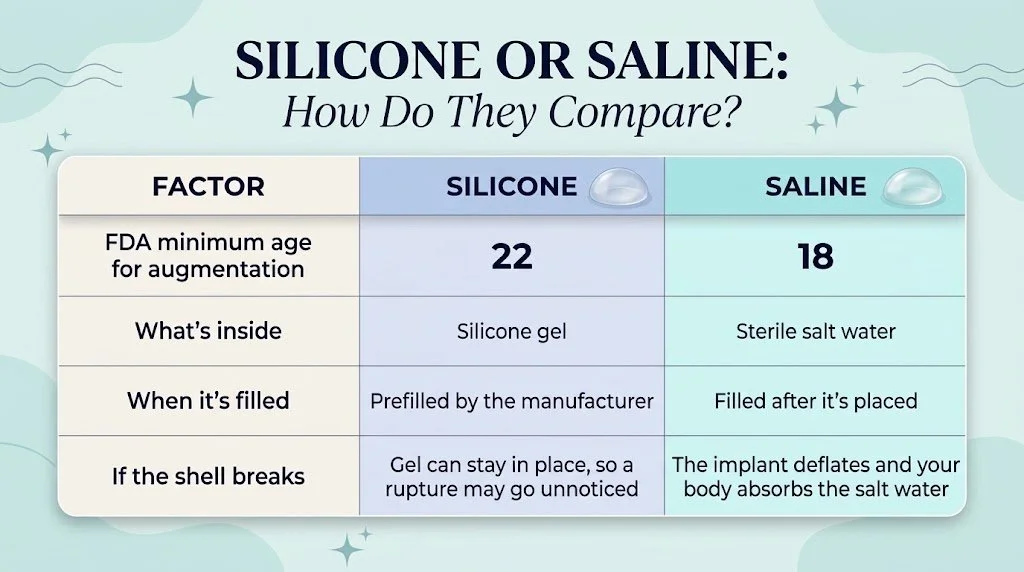
The FDA approves saline implants for augmentation at age 18 and silicone implants at age 22.
There's no upper age limit. In my 25 years of practice, the decision has rarely depended on age alone, and your overall health and medical history matters more.
9. Are your breasts different sizes?
Slight asymmetry is common and doesn't rule you out. Larger volume asymmetries may mean that I use a different implant size or profile on each side, if needed.
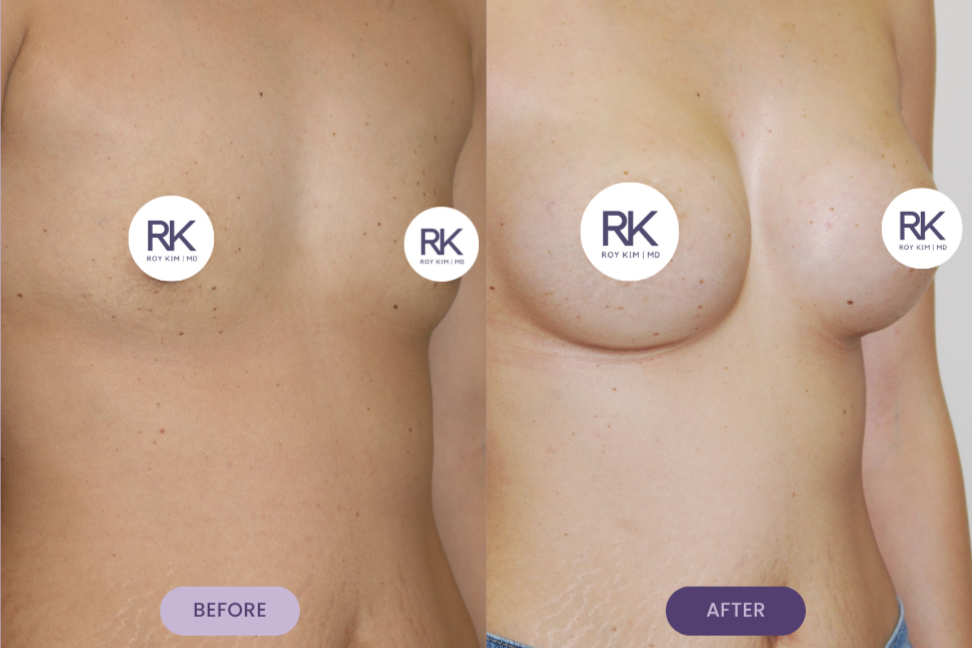
10. Can you have implants if you're thin?
Yes. If you have little natural tissue to cover the implant, a breast augmentation is still possible. I may recommend under the muscle placement, or fat grafting to provide better contours at the margins, or both for your best aesthetic result.
For most of my patients, I place the implant under the fascia, the thin layer covering the chest muscle. This subfascial placement leaves the muscle intact, so the implant doesn't move when you flex your chest, a problem called animation deformity.
11. Do you know implants may need another operation someday?
Breast implants may not be lifetime devices. Some women will need another operation at some point.
The need for a future breast lift is a possibility, due to age and time.
Capsular contracture, where scar tissue tightens around the implant, is one of the most common reasons for a second operation. Rippling, an implant edge you can feel, and changes in nipple sensation are also possible.
Silicone or Saline: How Do They Compare?
Motiva is my preferred implant. Natrelle by Allergan, Mentor, and Sientra implants are also FDA approved and are great options.
Your tissue, the pocket, and the size you choose affect your result more than the brand does.
Myths About Breast Augmentation Candidates
Myth: Implants mean you can't breastfeed.
Most women who could breastfeed before augmentation still can afterward. An incision in the fold under the breast stays away from the milk ducts.
Myth: Implants have to be replaced every 10 years.
There's no set replacement date. According to the FDA, you don't need to replace implants unless there's an issue.
Frequently Asked Questions About Breast Augmentation Candidacy
-
Yes, once your weight is stable for 6 months or longer.
-
No.
-
Very little. A breast implant will improve upper pole fullness- the volume at the top of your breasts - but will not achieve a formal breast lift or mastopexy.
A breast implant adds volume. Raising the breast and nipple takes a lift, which is a separate operation.
-
Usually in the fold under the breast. Alternative locations include the areola, and underarm/ axillary areas.
-
Most patients return to desk work after 1 to 5 days, and weight lifting and upper-body exercise after 1 to 4 weeks.
-
If screening is recommended for your age or risk, yes. Any finding that needs follow-up is cleared first.
-
Yes.
Summary
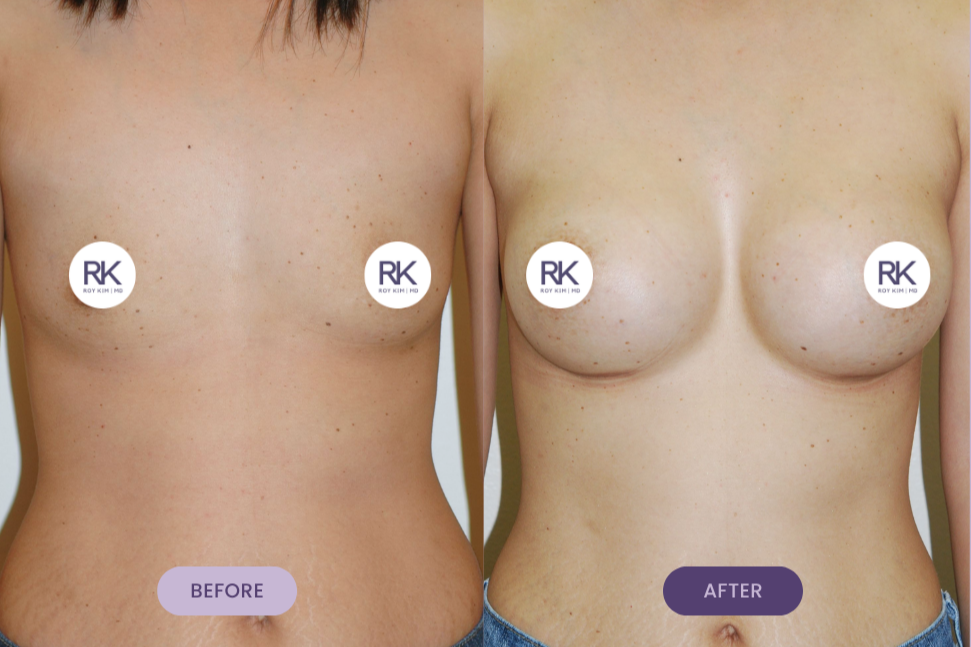
Breast augmentation adds size and upper fullness with a silicone or saline implant.
Most healthy women who want more volume are good candidates.
I plan surgery once breastfeeding has been over for 6 months and your weight has been stable for 6 months.
An implant doesn't raise a breast that has dropped, and a breast lift is a separate operation.
Asymmetry and a thin frame don't rule you out.
I prefer Motiva implants placed under the fascia, and other brands and placements are great options, depending on your anatomy and preferences.
The goal is a fuller breast that looks natural in and out of clothing.
Schedule Your Breast Augmentation Consultation
Call 415-362-1846 to schedule a consultation in San Francisco or Alameda. I'll talk with you about your goals and examine you to see whether augmentation fits what you want.
Roy Kim, MD, board-certified plastic surgeon
450 Sutter Street, Suite 1440, San Francisco, CA 94108
1403 Park Street, Alameda, CA 94501
415-362-1846