
Are PDRN and Salmon DNA Injections FDA Approved in the United States?
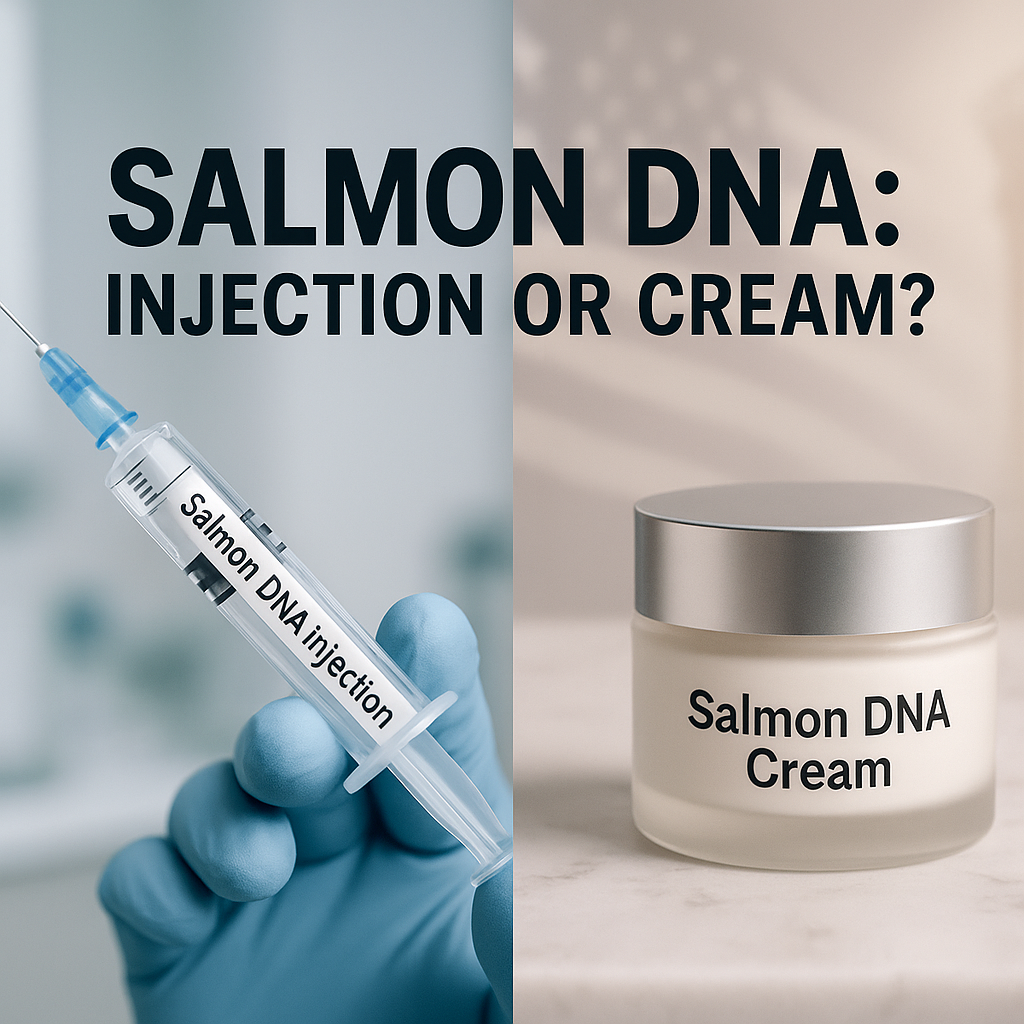
In the United States, consumers should distinguish topical PDRN cosmetics from injectable PN or PDRN treatments. A product being sold as a cosmetic does not mean its injectable use is FDA approved. As of September 2026, no injectable PDRN or PN product — including Rejuran — has received FDA approval for intradermal use in the US. Verify the exact product, route of administration, and current FDA status before any treatment.
United States Status as of September 2026
The short answer is no. As of September 2026, no injectable polynucleotide (PN) or polydeoxyribonucleotide (PDRN) product has received FDA approval for use as an intradermal skin booster in the United States. This includes Rejuran, the best-known branded PN injectable from South Korea, which is approved and widely used in Korea and several other Asian markets but remains unapproved for injection in the US.
Topical PDRN products — serums and creams sold over the counter — are legally available in the US and regulated as cosmetics by the FDA. That classification means they have not been evaluated for safety or efficacy as drugs. Being sold legally as a cosmetic is not the same as being FDA-approved as a treatment.
How to verify current FDA status: Search the product name in the FDA’s medical device database or the FDA Drugs@FDA database. Regulatory status can change — always confirm directly rather than relying on clinic marketing materials.
What PDRN, PN, and Rejuran Are
All three names refer to closely related compounds derived from salmon DNA — specifically from salmon milt (the reproductive fluid of male salmon). Here is how they relate to each other:
PDRN (polydeoxyribonucleotide) refers to shorter DNA chain fragments extracted and purified from salmon. These fragments are small enough to interact with receptors in human tissue that promote cell repair, collagen production, and angiogenesis (new blood vessel formation).
PN (polynucleotide) is a broader term covering longer DNA chain fragments from the same source. In everyday aesthetic practice, PN and PDRN are often used interchangeably, though the exact chain length and formulation differ by brand.
Rejuran is a South Korean brand name for a PN-based injectable skin booster. It is injected in micro-aliquots into the dermis to stimulate fibroblast activity, collagen synthesis, and skin repair. Rejuran Healer is the original formulation; subsequent versions (Rejuran S, Rejuran I) are variations for specific concerns like scars or the eye area.
Salmon DNA has a high degree of compatibility with human tissue because the nucleotide composition of fish DNA is structurally similar to human DNA. This is why these products are used in wound healing and aesthetic medicine rather than triggering an immune reaction.
Topical Products Compared With Injections
The route of administration is the single most important distinction for US consumers. Below is a direct comparison across the key factors.
| Factor | Injectable PN / PDRN (e.g. Rejuran) | Topical PDRN serum or cream |
|---|---|---|
| Route | Intradermal injection by a clinician | Applied to skin surface |
| Purpose | Skin regeneration, collagen stimulation, elasticity, fine lines | Hydration, antioxidant support, surface skin conditioning |
| US status | Not FDA approved for injection | Legal cosmetic — no approval required |
| Evidence | Multiple peer-reviewed RCTs supporting dermal regeneration and collagen improvement | Limited — large PDRN molecule has poor skin penetration intact; modest hydration data |
| Cost range (US) | $800–$1,500 per session (off-label, imported product) | $40–$200 per product |
| Availability | Off-label at select clinics importing from Korea; not legally manufactured for US injection market | Widely available online and in beauty retailers |
| Downtime | Mild redness and swelling 1–3 days | None |
FDA Approval and Off-Label Use
Some US clinics do offer injectable PN or PDRN treatments. When this happens, it is off-label use of an imported product that has not gone through the FDA's premarket approval or 510(k) clearance process for injectable use. Off-label use of approved drugs is legal in certain contexts, but importing and administering an unapproved injectable product for cosmetic purposes exists in a murkier regulatory space.
What this means for patients:
- The FDA has not evaluated the manufacturing standards, sterility, or safety of these imported injectable products for the US market
- If an adverse event occurs, recourse through standard FDA channels is limited
- Clinics offering these treatments are doing so outside the standard US regulatory framework — ask specifically about the product’s country of origin, lot number, and storage conditions
- Marketing language like “salmon DNA facial” or “PDRN treatment available here” does not indicate FDA approval — confirm directly
This is not a statement that injectable PDRN is unsafe — the evidence from international markets and clinical studies is broadly favorable. It is a statement that the FDA's safety review process has not been completed for any injectable PN or PDRN product in the US as of this writing.
Evidence and Expected Results
The research base for injectable PDRN and PN is more substantial than for many cosmetic injectables. Key findings from the published literature include:
Collagen and elastin stimulation: Multiple studies demonstrate that PDRN activates adenosine A2A receptors in fibroblasts, increasing collagen type I synthesis and reducing inflammatory cytokines — the same pathway responsible for its use in wound healing
Skin texture and elasticity: Randomized controlled trials (RCTs) in Korean and Italian dermatology literature report measurable improvements in skin elasticity, hydration, and roughness at 4–12 weeks following a series of intradermal injections
Fine lines and pore size: Patient-reported and objective measurements show moderate improvement in fine lines and pore appearance, particularly with a course of 3 sessions spaced 2–4 weeks apart
Wound healing: PDRN has a longer clinical track record as a wound healing agent than as a cosmetic injectable — this is where the strongest evidence base lies
For topical products, the evidence is more limited. The PDRN molecule is large and does not readily penetrate intact skin. Some formulations use microneedle patches or chemical permeation enhancers to improve delivery, with more modest evidence of benefit compared to the injectable route.
Risks and Contraindications
When properly manufactured and administered by an experienced provider, injectable PN and PDRN have a favorable safety profile in international studies. Reported side effects are generally mild and transient:
Redness, swelling, and bruising at injection sites — typically resolves within 1–3 days
Temporary skin sensitivity
Rare: nodule formation if product is injected too superficially
Contraindications to discuss with any provider include:
Known fish allergy — salmon-derived products are contraindicated
Active skin infection or inflammation at the treatment site
Autoimmune conditions or immunosuppressive therapy
Pregnancy or breastfeeding (insufficient data)
Allergy to any excipient in the specific formulation
The additional risk in the US context is product quality: imported injectables that have not passed FDA manufacturing inspections may have sterility or concentration issues that are not present in the Korean clinical trial data.
FDA-Approved Alternatives for Similar Goals
If your goal is improved skin hydration, texture, elasticity, or collagen stimulation, several FDA-approved or cleared options are available in Dr. Kim's San Francisco, Alameda, and Beverly Hills practices:
The first FDA-approved hyaluronic acid microdroplet skin booster in the US. Injected intradermally to improve hydration and smoothness for up to 6 months — the closest approved equivalent to the skin booster concept.
Compare skin boosters →Platelet-rich plasma and platelet-rich fibrin use your own blood-derived growth factors to stimulate collagen and tissue repair — a similar regenerative mechanism to PDRN without imported product concerns.
PRP, PRF and PRFM →Combines mechanical collagen induction with PRP for enhanced skin texture, pore reduction, and glow. A well-evidenced option for skin improvement with no imported product concerns.
Microneedling with PRP →HA fillers like Juvéderm and Restylane address volume loss and fine lines with a well-established safety profile and reversibility.
Facial fillers →Frequently Asked Questions
-
As of September 2026, Rejuran has not received FDA approval for injectable use in the United States. It is approved in South Korea and widely used across Asia, but the US premarket approval process has not been completed for any injectable PN product.
-
No injectable PDRN or PN product has FDA approval for intradermal use in the US as of September 2026. Some clinics offer it using imported products on an off-label basis, which carries legal and safety risks because those products have not been reviewed by the FDA for sterility and quality in the US market.
-
Topical PDRN is legal to sell in the US as a cosmetic and may provide surface-level hydration benefits. However, the large PDRN molecule has limited ability to penetrate intact skin, making the evidence for topical products considerably less robust than for injectables. Results are generally more modest than those seen with intradermal treatment.
-
Both PN (polynucleotide) and PDRN (polydeoxyribonucleotide) are salmon-derived DNA fragments. PDRN typically refers to shorter chain fragments; PN is a broader category covering longer chains. In aesthetic practice the terms are often used interchangeably, though exact formulations and concentrations vary by brand and manufacturer.
-
Off-label injectable PN or PDRN sessions at US clinics typically run $800 to $1,500 per session, with most treatment courses involving 3 sessions. Topical PDRN serums range from roughly $40 to $200 per product. FDA-approved Skinvive generally costs $500 to $900 per session depending on the area treated.
-
The closest FDA-approved alternatives include Skinvive by Juvéderm (HA microdroplet skin booster), PRP and PRF treatments using your own blood's growth factors, and microneedling with PRP for collagen stimulation. Each addresses skin quality, hydration, or texture through a different mechanism — Dr. Kim can help identify the best fit for your specific goals during a consultation.
Want to learn more? Watch my YouTube Video below!
Questions About Skin Rejuvenation Options?
Dr. Kim offers consultations at his San Francisco, Alameda, and Beverly Hills practices to discuss FDA-approved skin booster and collagen-stimulation treatments tailored to your goals.
Call 415-362-1846 or email info@drkim.com to schedule a consultation.