
Does Creatine Help Fat Grafting Last Longer?
By Roy Kim, MD About Dr. Roy Kim, board-certified plastic surgeon | Updated September 2026
Overview
Creatine improved fat graft survival in a 2025 laboratory and animal study. It hasn't been shown to help fat grafts last longer in humans, so I don't recommend taking it for that purpose.
The study was published in The FASEB Journal and did not include human patients. No one knows yet whether creatine taken by mouth changes how much grafted fat survives. A randomized trial in fat grafting patients would answer the question.

1. Why doesn't all the fat survive after fat grafting?
Grafted fat loses its blood supply when it's moved. The fat cells have to stay alive until new blood vessels grow into them, and some of them don't.
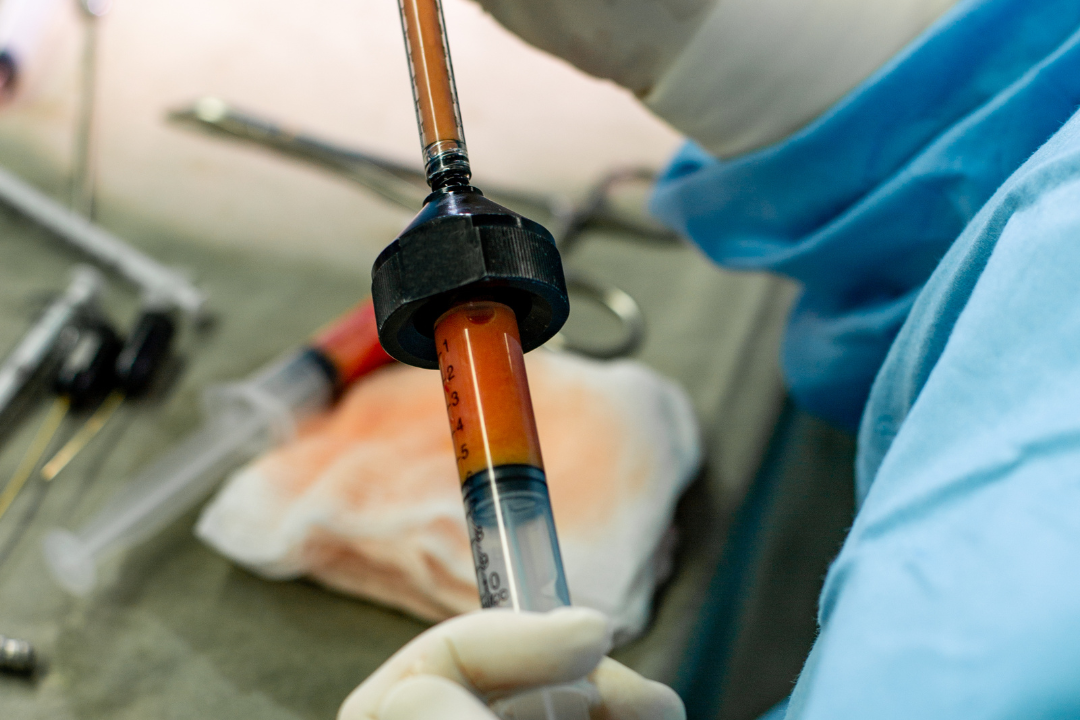
Fat grafting moves your own fat from one part of your body to another. I remove the fat with liposuction, process it, and inject it where you want more volume. Common areas include the face, breasts, buttocks as in a Brazilian butt lift, hands, and contour irregularities such as dents after liposuction.
Until new blood vessels arrive, the injected fat relies on oxygen and nutrients reaching it from the surrounding tissue. Cells that don't get enough during this healing period die, and your body absorbs them. This loss of volume is the main limitation of fat grafting.
2. How could creatine help a fat graft?
Creatine helps cells regenerate ATP, the molecule they use for energy. Researchers wanted to know whether extra creatine could keep grafted fat cells alive while they wait for a new blood supply.
Most people know creatine as a gym or neurological supplement. Every cell runs on ATP, including fat cells.
A fat cell that has been removed, processed, and placed in a new location is short on oxygen and nutrients. The theory is that creatine gives those cells an energy reserve until blood vessels reach them.
3. What did the 2025 creatine study find?
In a study published in The FASEB Journal in 2025, creatine improved fat graft survival in laboratory fat tissue and in an animal model of fat grafting.
The researchers reported that creatine supported energy metabolism in the fat cells, reduced oxidative stress, a form of cell damage, protected the mitochondria, the parts of the cell that produce energy, and improved the growth of new blood vessels.
Together, these effects led to more fat surviving in the animal model. For background on how fat grafting works, see Fat Grafting: A Complete Guide.
4. Does the creatine study apply to people?
Not yet. The researchers studied fat tissue in the lab and fat grafts in animals. They didn't give creatine to plastic surgery patients and measure how much fat stayed.
Several questions have no answer yet: whether oral creatine improves fat graft retention in people, what dose would be needed, when to start it and how long to take it, and whether creatine taken by mouth reaches a human fat graft and has the same effect seen in the experiment.
If you'd like to talk about fat grafting, call my office at 415-362-1846.
5. Should you take creatine after fat grafting?
I don't recommend taking creatine to improve fat graft retention based on the evidence available now. That isn't the same as saying creatine doesn't work, or it's safe or not safe - human data doesn't exist yet.
Creatine is one of the most extensively studied nutritional supplements. That research covers exercise performance and muscle metabolism. It doesn't show that creatine helps grafted fat survive in your face, breasts, or buttocks.
6. What would a human study need to show?
A randomized trial comparing creatine with a placebo in patients having the same type of fat grafting would settle the question.
The fat harvesting, processing, and injection technique would need to be as consistent as possible across both groups. Fat retention would then be measured several months later with MRI, 3D imaging, or another validated method.
If the patients taking creatine consistently kept more fat, I would change my advice.

7. Why is this study worth following?
The idea fits what's known about why fat grafts lose volume. Cells are lost in the window between grafting and the arrival of a new blood supply. A treatment that helps them tolerate low oxygen during that window could improve survival.
Creatine is also inexpensive, widely available, and already well studied in people for other reasons. That makes it easier to test in a clinical trial than many experimental fat grafting approaches.
[PHOTO: 3D imaging scan used to measure breast volume after fat grafting]
Creatine Evidence: Animal Study vs. Human Patients
Factor: 2025 lab and animal study | Human fat grafting patients
Who was studied: Fat tissue in the lab and an animal model | No human trial yet
Effect on fat survival: Improved survival | Unknown
Dose: Set by the researchers for the experiment | Not established
When to start and how long: Set by the researchers for the experiment | Not established
My recommendation: Worth more research | Not recommended for graft retention
Common Myths About Creatine and Fat Grafting
Myth: Creatine is proven to make fat grafts last longer.
The only evidence comes from lab tissue and animals.
Myth: If creatine helps muscle, it will help a fat graft.
Muscle performance and fat graft survival are different questions. Studies on creatine and exercise don't tell you anything about grafted fat.
Myth: A supplement can make up for how the fat is handled.
How the fat is harvested, processed, and placed affects how much of it survives. No supplement has been shown to replace careful technique.
Frequently Asked Questions
-
It hasn't been shown to. The 2025 study didn't include BBL patients or any human patients. See Brazilian Butt Lift: What to Expect for more on the procedure.
-
I think it's safe to take, and has other benefits, but may have little to no effect on fat retention after fat grafting.
-
It varies with the area treated and the technique used, typically 60-70% of fat that is grafted survives.
-
The FASEB Journal, in 2025.
-
Yes, extensively, for exercise and muscle performance. It hasn't been studied in fat grafting patients.
-
Grafted fat that survives becomes living tissue in its new location. It can still change in size if you gain or lose weight.
-
Some patients choose a second session to add volume. That depends on how much fat survives and the result you want.
-
A randomized human trial showing that patients who take creatine keep more of their grafted fat.
Summary
Creatine improved fat graft survival in a 2025 laboratory and animal study.
It hasn't been tested in fat grafting patients.
The dose, timing, and duration for people are unknown.
I don't recommend creatine to help a fat graft last longer.
A randomized human trial would show whether it works in people.
Schedule a Fat Grafting Consultation
Call my office at 415-362-1846 or email info@drkim.com to schedule a consultation. I'll talk with you about your goals and examine the areas you'd like to treat.
Roy Kim, MD, board-certified plastic surgeon
450 Sutter Street, Suite 1440, San Francisco, CA 94108
1403 Park Street, Alameda, CA 94501