
Exploring How AI Is Being Used in Robotic Plastic Surgery
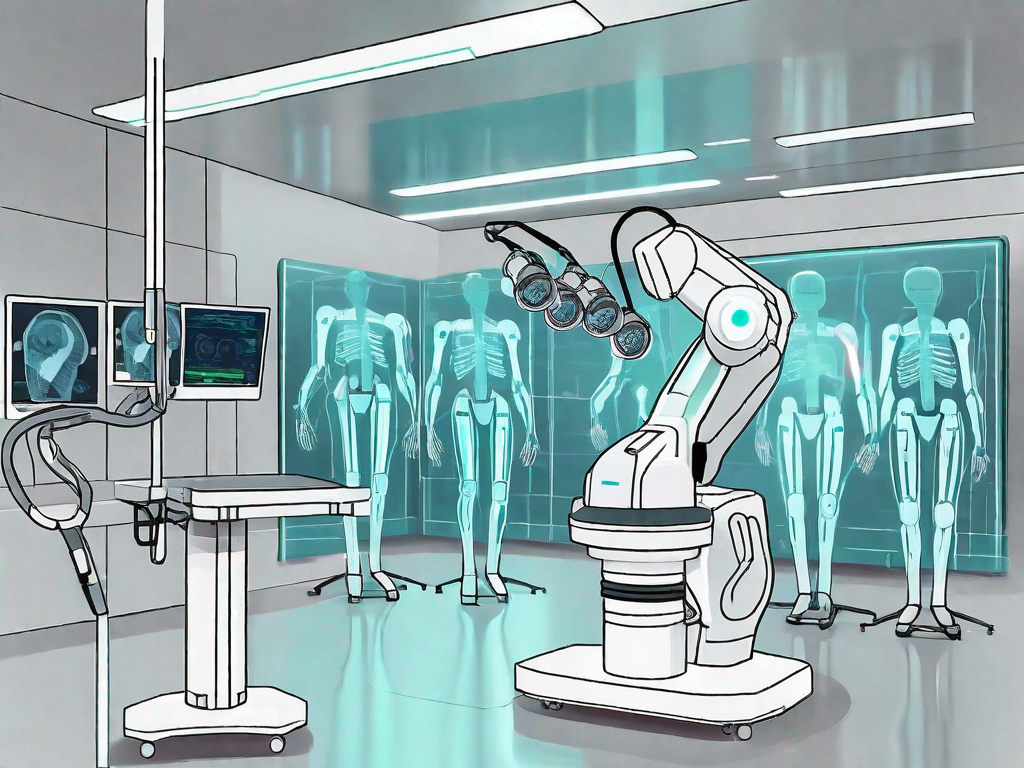
Robotic plastic surgery is a rapidly advancing field that has been revolutionized by the incorporation of artificial intelligence (AI). By merging the precision and accuracy of robots with the cognitive abilities of AI, surgeons are now able to offer patients unprecedented outcomes and improved safety in their procedures. In this article, we will delve into the myriad ways in which AI is being utilized in the realm of robotic plastic surgery, and the implications it holds for the future of this specialized branch of medicine.
Understanding the Basics of Robotic Plastic Surgery
Before delving into the role of AI in robotic plastic surgery, it is imperative to establish a fundamental understanding of this innovative field. Plastic surgery has witnessed a remarkable evolution, from its earliest documented procedures to the advent of robotic systems. With the incorporation of robotic assistance, surgeons are able to achieve enhanced precision, reduced scarring, and shorter recovery times for their patients. These advancements in technology have transformed the field, making it more accessible and amenable to a wider range of individuals.
The Evolution of Plastic Surgery
Over the years, plastic surgery has evolved from simple reconstructive procedures to a multidimensional field encompassing a wide variety of cosmetic enhancements. The rise of robotic technology has facilitated this evolution by providing surgeons with a powerful tool to carry out complex and intricate procedures with unparalleled precision.
In the early days of plastic surgery, procedures were primarily focused on reconstructing damaged or disfigured body parts. Surgeons would manually manipulate tissues and use various techniques to restore form and function. However, as technology advanced, so did the capabilities of plastic surgery.
With the introduction of robotic systems, surgeons gained access to a new level of precision and control. These robotic systems, equipped with advanced imaging technology and robotic arms, allow surgeons to perform intricate procedures with greater accuracy than ever before. The ability to visualize the surgical site in real-time and manipulate instruments with robotic precision has revolutionized the field of plastic surgery.
Robotic plastic surgery has also expanded the range of procedures that can be performed. While reconstructive surgery remains an essential aspect of the field, cosmetic enhancements have become increasingly popular. From facelifts to breast augmentations, robotic systems have made it possible for surgeons to achieve natural-looking results with minimal scarring.
The Role of Robotics in Modern Medicine
Within the broader field of medicine, robotic systems have rapidly gained traction due to their ability to enhance surgical outcomes. Their integration in various surgical specialties, including plastic surgery, has resulted in reduced invasiveness, shorter hospital stays, and improved patient satisfaction. By supplementing the surgeon's technical abilities, robotics has opened up new possibilities in the world of surgery.
One of the key advantages of robotic systems is their ability to perform minimally invasive procedures. Traditional open surgeries often require large incisions, leading to more post-operative pain, longer recovery times, and increased risk of complications. Robotic systems, on the other hand, allow surgeons to perform procedures through small incisions, resulting in less trauma to the surrounding tissues and faster healing for the patient.
Furthermore, robotic systems offer surgeons a greater range of motion and dexterity. The robotic arms can be controlled with precision, allowing for delicate maneuvers and precise suturing. This level of control is particularly beneficial in plastic surgery, where the aesthetic outcome is of utmost importance.
Another advantage of robotic plastic surgery is the improved visualization provided by the robotic imaging systems. Surgeons can obtain high-resolution, three-dimensional images of the surgical site, allowing for better planning and execution of procedures. This enhanced visualization helps surgeons identify critical structures and avoid potential complications.
Additionally, robotic systems can be programmed to assist surgeons in specific tasks. For example, they can provide real-time feedback on tissue tension during suturing, ensuring optimal wound closure. This level of assistance not only improves surgical outcomes but also reduces the learning curve for surgeons who are new to the field.
In conclusion, robotic plastic surgery has revolutionized the field of plastic surgery by providing surgeons with enhanced precision, reduced scarring, and shorter recovery times. The evolution of plastic surgery, coupled with the integration of robotic systems, has expanded the range of procedures that can be performed and made the field more accessible to a wider range of individuals. As technology continues to advance, the role of robotics in plastic surgery is expected to grow, further improving patient outcomes and pushing the boundaries of what is possible in the field.
The Intersection of AI and Robotic Surgery
At the heart of the revolution in robotic plastic surgery lies the integration of AI into surgical systems. AI, with its ability to analyze vast amounts of data and make real-time decisions, has enabled robots to perform complex tasks that were previously reserved for human surgeons alone. Let's explore how AI fits into the context of surgical procedures and enhances the precision of robotic surgery.
Defining AI in the Context of Surgery
Artificial intelligence, in the context of surgery, refers to the ability of computer systems to analyze medical data, identify patterns, and make informed decisions. Machine learning algorithms, a subset of AI, enable robots to continuously improve their performance by learning from real-time surgical data. By combining the analytical capabilities of AI with the dexterity of robotic systems, surgeons can achieve unparalleled precision and accuracy.
When it comes to robotic surgery, AI plays a crucial role in enhancing the capabilities of the robotic systems. The integration of AI algorithms allows robots to process and interpret vast amounts of medical data, including patient history, diagnostic images, and surgical guidelines. This enables the robots to make informed decisions during surgery, ensuring optimal outcomes for patients.
Moreover, AI-powered robotic systems can adapt and learn from each surgical procedure they perform. By analyzing data from previous surgeries, the AI algorithms can identify patterns and trends, improving the accuracy and efficiency of future procedures. This continuous learning process enables the robots to refine their techniques and provide better surgical outcomes over time.
How AI Enhances Robotic Precision
The incorporation of AI into robotic surgery systems has revolutionized the field by providing surgeons with real-time feedback and guidance. With AI-powered image recognition algorithms, robots are able to analyze pre-operative scans and assist surgeons in identifying critical anatomical structures, minimizing the risk of errors and complications during surgery.
Furthermore, AI algorithms can continually analyze the surgical environment, adjusting robotic movements in response to the patient's unique anatomy. This adaptive capability ensures that the robots can navigate complex anatomical structures with precision, reducing the risk of accidental damage to surrounding tissues.
AI also enables robots to perform delicate and intricate surgical tasks with exceptional precision. By leveraging machine learning algorithms, robots can mimic the movements of skilled surgeons, replicating their expertise and finesse. This level of precision is particularly beneficial in procedures that require intricate suturing or microvascular anastomosis, where even the slightest error can have significant consequences.
In addition to enhancing precision, AI also improves the efficiency of robotic surgery. By automating certain aspects of the surgical process, such as suturing or tissue manipulation, robots can perform tasks with greater speed and accuracy than human surgeons. This not only reduces the duration of the surgery but also minimizes the risk of human error, leading to improved patient outcomes.
Overall, the integration of AI into robotic surgery systems has transformed the field, enabling surgeons to achieve unprecedented levels of precision and accuracy. By harnessing the power of AI algorithms, robots can analyze complex medical data, adapt to unique patient anatomies, and perform intricate surgical tasks with exceptional precision. As AI continues to advance, the future of robotic surgery holds even greater promise, with the potential to revolutionize the field and improve patient care.
The Future of AI in Robotic Plastic Surgery
The potential for AI-driven robotic surgery in the realm of plastic surgery is immense. As research and development in this field continue to accelerate, experts predict that even more sophisticated AI algorithms and robotic systems will emerge. These advancements hold the promise of further improving surgical outcomes and patient satisfaction.
Predicted Advancements in AI Surgical Technology
In the coming years, AI-driven robotic surgery is expected to witness tremendous advancements. Surgeons may have access to AI algorithms that can analyze patient data, predict surgical outcomes, and even assist in preoperative planning. Furthermore, the integration of augmented reality (AR) technology into robotic surgery systems holds the potential for real-time visualization during procedures, providing surgeons with enhanced precision and accuracy.
Potential Challenges and Solutions in AI Surgery
While the future of AI in robotic plastic surgery appears promising, it is essential to acknowledge and address the challenges that lie ahead. One key concern is the ethical implications of relying heavily on AI algorithms in surgical decision-making. It is crucial for the medical community to establish guidelines and protocols to ensure that AI-driven robotic surgery remains ethically sound and transparent. Additionally, issues such as patient privacy and data security must be given due consideration to maintain patient trust and confidence in these new technologies.
In conclusion, the integration of AI into robotic plastic surgery has opened up new horizons for the field, revolutionizing surgical outcomes and patient experiences. With the ability to analyze vast amounts of data and make informed decisions in real-time, AI-driven robotic systems enhance the precision and accuracy of surgical procedures. As research and development in this field continue to progress, the future of AI in robotic plastic surgery holds tremendous potential for further advancements and improved patient outcomes. However, it is imperative that we navigate the ethical considerations and challenges that arise with the use of AI technology to ensure the responsible and beneficial implementation of these revolutionary techniques.