
Is Your Alameda Botox Provider Safe? 5 Red Flags You Shouldn't Ignore

Overview
The skill of the person holding the syringe determines your safety and your results. Too many patients treat neuromodulators like a commodity, shopping for the lowest price or the most convenient slot on a lunch break, which is how you end up with dropped brows, asymmetric smiles, or results that fade in six weeks. You need an injector who reads your anatomy before picking up a needle.
Medical procedures belong in a medical office, not a hair salon or a friend's living room.
Bargain-basement pricing usually means diluted product, a rushed hand, or both.
A proper consultation includes a health history and a full facial assessment, not a price menu.
If an injector offers to "use up the rest of the syringe" on a different area for free, walk out.
1. The Consultation Feels Like a Sales Pitch
After 25 years of practice, I still sit down with every new injectable patient before I pick up a needle, because the assessment is the treatment. A provider who skips straight to the pricing menu is the first red flag on this list.
Your face is not a standardized template, and the way your muscles move differs from your best friend or the celebrity you follow on Instagram. A skilled injector watches you speak, smile, and frown to gauge the strength of your corrugators, whether one brow sits lower than the other, and how much your frontalis is already working to hold your lids up. That information changes the dose, the depth, and the injection points.
An injector who asks "Where do you want Botox?" and agrees without examining you is operating like a fast-food clerk. A patient came to my Alameda office last year after a quick-fix clinic placed product too low on her forehead without checking her natural brow position, and the result was a heavy, hooded look that took nearly four months to resolve. A ten-minute consultation would have prevented the whole thing.
2. The Price Is Suspiciously Low
Everyone loves a deal, and I understand the appeal of saving money on a treatment you plan to repeat three times a year. In aesthetic medicine, bargain pricing almost always signals a corner being cut somewhere you don't want it cut.
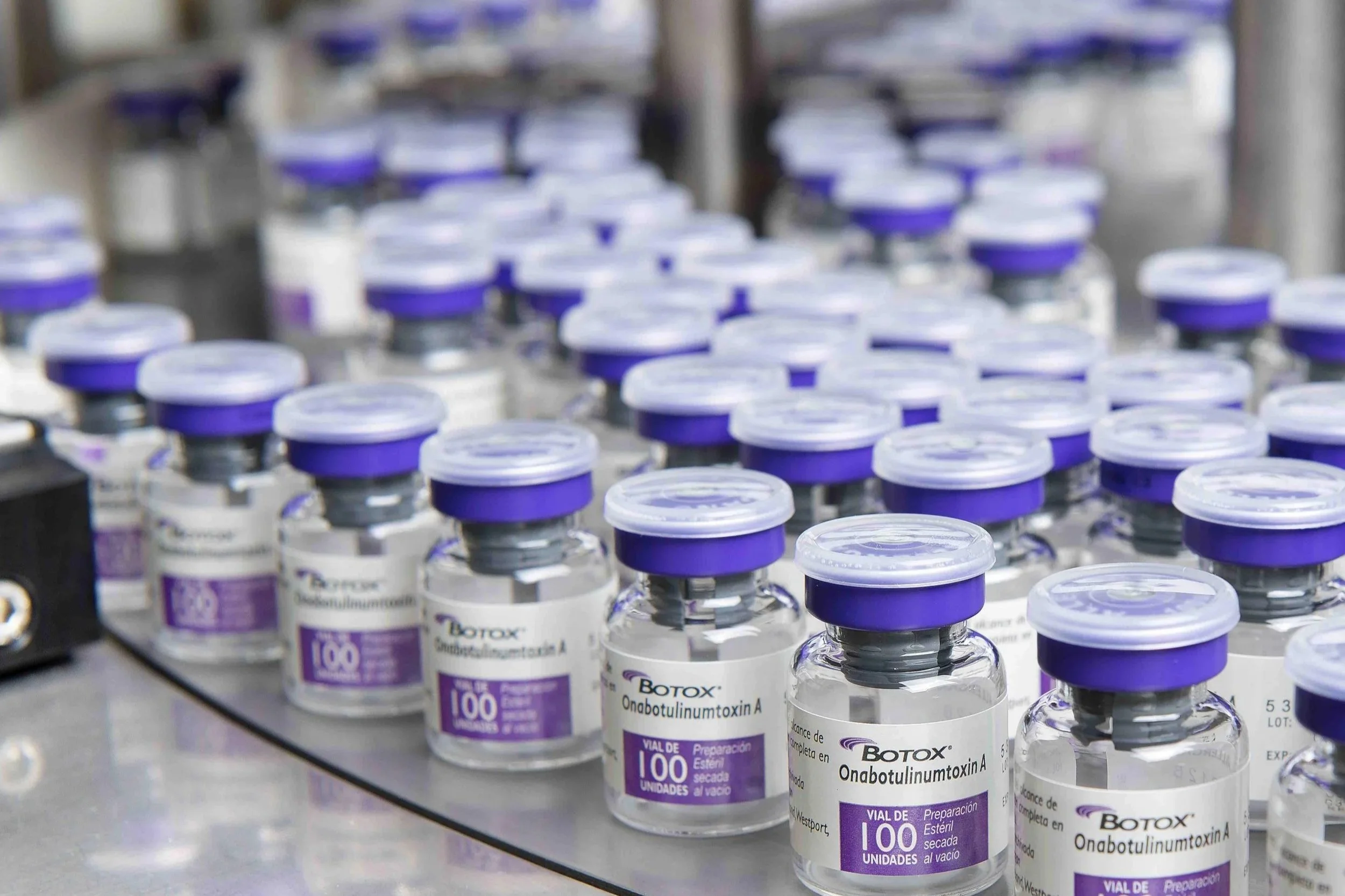
Neuromodulators have a fixed wholesale cost, and the manufacturer does not offer massive volume discounts to small clinics. When you see a price that seems too good to be true, the clinic is typically compromising in one of three ways.
Over-dilution: Botox arrives as a powder that we reconstitute with saline, and unethical providers add extra saline to stretch the vial. You pay for 20 units but get the effect of 10, and the result fades in weeks instead of months.
Counterfeit or gray-market product: Legitimate practices order directly from the manufacturer, with temperature-controlled shipping and a verified chain of custody. Product imported from overseas sidesteps all of that.
Bait and switch: The advertised per-unit price is real, but it requires a minimum purchase you don't need, pushing your total above what an honest clinic would have charged.
If you want a straightforward assessment of your treatment needs, my Park Street office in Alameda is open for consultations, and we're transparent about units and pricing before anyone touches your face. Reach us at 415-362-1846.
3. They Operate in a Non-Medical Environment
You've seen the flyers around the Bay Area for "Botox parties," pop-up events at hair salons, med spas with no physician on-site, or even private homes. These events reframe a medical procedure as a casual social hour, which is one of the clearest red flags in the injector world.
Infection control is effectively impossible in a living room, where lighting is poor, surfaces are not sterile, and there's no crash cart if someone has a vasovagal episode or a vascular compromise. A controlled medical setting gives you a proper exam light, a clean field, a documented patient record, and the equipment to handle a complication if one occurs.
Alcohol usually flows freely at these events, and alcohol thins your blood, which means more bruising and worse photos for two weeks. More importantly, informed consent falls apart the moment a patient has been drinking, so any provider willing to inject in that setting is telling you what their standard of care looks like.
4. They Lack Specific Anatomy Training
There is a real difference between knowing how to inject and knowing where to inject. A weekend certificate course teaches the mechanics of drawing up product and placing a needle, but it does not produce an expert in facial anatomy, and the gap shows up in results.
Ask your provider about their training background, how long they've focused on aesthetics specifically, and who supervises them if they're a nurse injector. A board-certified plastic surgeon or a dedicated aesthetic nurse with years of focused experience operates from a different depth of knowledge than a generalist who added injectables to a long list of other services.
Three questions that separate a trained injector from a trained technician:
"How will this injection affect my brow position?"
"What specific muscles are you targeting, and at what depth?"
"How do you avoid hitting the levator palpebrae, the muscle that lifts the eyelid?"
If they stumble, deflect, or answer in vague marketing terms, they likely lack the depth required for consistent results. I often walk patients through the interplay between the frontalis (the forehead lifter) and the orbicularis oculi (the muscle that closes the eye and creates crow's feet), because relaxing one too much drops the brows, and relaxing the other too much flattens the smile. The face is a balance, and treating it like a series of isolated muscles is how people end up looking strange.
[READ HERE: The Difference Between Botox, Dysport, Letybo, and Xeomin]
5. They Promise to "Use Up" the Syringe
This one is subtle, and most patients miss it. A provider finishes your planned treatment, looks at what's left in the syringe, and says, "We have a few units left, let's put them somewhere so the product doesn't go to waste." It sounds generous. It's reckless.
Neuromodulators require precise dosing calibrated to the specific muscle being treated, and adding "extra" product to an area that wasn't planned throws off the balance of your face. That's how you end up with the frozen look, an unintended flat smile, or one side that moves differently from the other. A professional draws up exactly the units you need and throws out what's left, because your face is not a clearance rack.
What to Look for in a Safe and Skilled Alameda Injector
You want a provider who will tell you no when a treatment isn't right for you, which is the most reliable marker of integrity in this field. I turn patients away when expectations are unrealistic, when the requested treatment will produce an unnatural result, or when the underlying concern would be better addressed by a different procedure.
Follow-up is another signal worth watching. I see my injectable patients back at two weeks if they have any concern, because that's the window to evaluate how the product settled and whether a small touch-up would improve symmetry. A provider who injects you and vanishes is not invested in your outcome.
A few practical checks before you book with any Bay Area injector:
Verify board certification or nursing licensure and the name of the supervising physician.
Look for before-and-after photos of patients with facial structures similar to yours, not polished stock images.
Ask whether the practice uses authentic product sourced directly from the manufacturer.
Confirm that the treatment happens in a clinical setting with a physician available.
Read reviews that describe specific outcomes, not generic five-star praise.
Myths About Botox Safety
Myth: A registered nurse is automatically safe to inject. Licensure is the floor, not the ceiling. California requires a supervising physician for nurse injectors, but the quality of that supervision and the nurse's aesthetic training vary enormously. Ask about both.
Myth: Botox is the same everywhere, so price is the only real difference. The product is the same when sourced legitimately, but dilution, injector skill, and injection technique change the outcome more than the brand on the vial.
Myth: If something goes wrong, it's reversible. Filler complications respond to hyaluronidase, but Botox has no antidote. A placement error means waiting three to four months for the product to wear off.
Frequently Asked Questions
-
Check credentials online before you book. For a physician, look for board certification through the American Board of Plastic Surgery, the American Board of Dermatology, or another recognized specialty board. For a nurse injector, confirm their California RN license and find out who the supervising physician is and how involved that physician remains in the practice. Read reviews that describe specific outcomes, and look at before-and-after photos featuring patients who resemble your facial structure.
-
Placement errors cause issues like eyelid drooping (ptosis), a crooked smile, or an unnaturally heavy brow, and you typically wait three to four months for the product to wear off because Botox has no true antidote the way filler has hyaluronidase. For ptosis specifically, prescription drops containing apraclonidine sometimes stimulate an accessory muscle to lift the lid temporarily, which helps while the product metabolizes. Getting the placement right the first time remains the only reliable fix.
-
Not necessarily, and in many cases treating the face holistically produces a more natural result than isolating a single muscle group. Frown lines between the brows often look better when the forehead is also addressed, because the frontalis compensates when the glabella relaxes. The question is whether the provider explains the muscular relationship driving the recommendation, or whether they're padding the bill.
-
You won't judge the syringe by looking at it, so you judge by outcome and reputation. Standard results from properly dosed Botox last three to four months, and if your results consistently fade at four to six weeks, the product was likely over-diluted or the dose was too low for your muscle mass. A single short result might be a fluke, but a pattern across multiple visits means the clinic is cutting corners.
-
A full facial assessment with you animating your muscles, a medical history covering allergies, neuromuscular conditions, pregnancy status, and current medications, a discussion of your specific goals, and a written treatment plan with the exact units and injection sites before anything is drawn up. If any of those steps is skipped, the consultation is incomplete.
Summary
Choosing the right injector protects your face and your health. Watch for rock-bottom pricing, non-medical treatment locations, providers who skip the health history, and the subtle tell of "let's use up the syringe." A skilled injector understands facial anatomy as a balanced system, refuses to compromise on product sourcing or setting, and is willing to tell you no when a treatment isn't in your interest. Trust your instincts, because if the environment feels chaotic or the conversation feels like a sales pitch, it is.
Schedule Your Consultation
Ready to discuss your aesthetic goals?
Call 415-362-1846 or email info@drkim.com to set up a time.
San Francisco: 450 Sutter Street, Suite 1440, San Francisco, CA 94108
Alameda: 1403 Park Street, Alameda, CA 94501
Follow and Connect with me on my social media!