
Is Botox Right for Your Face? The Complete Guide to Neuromodulators in Alameda
Overview
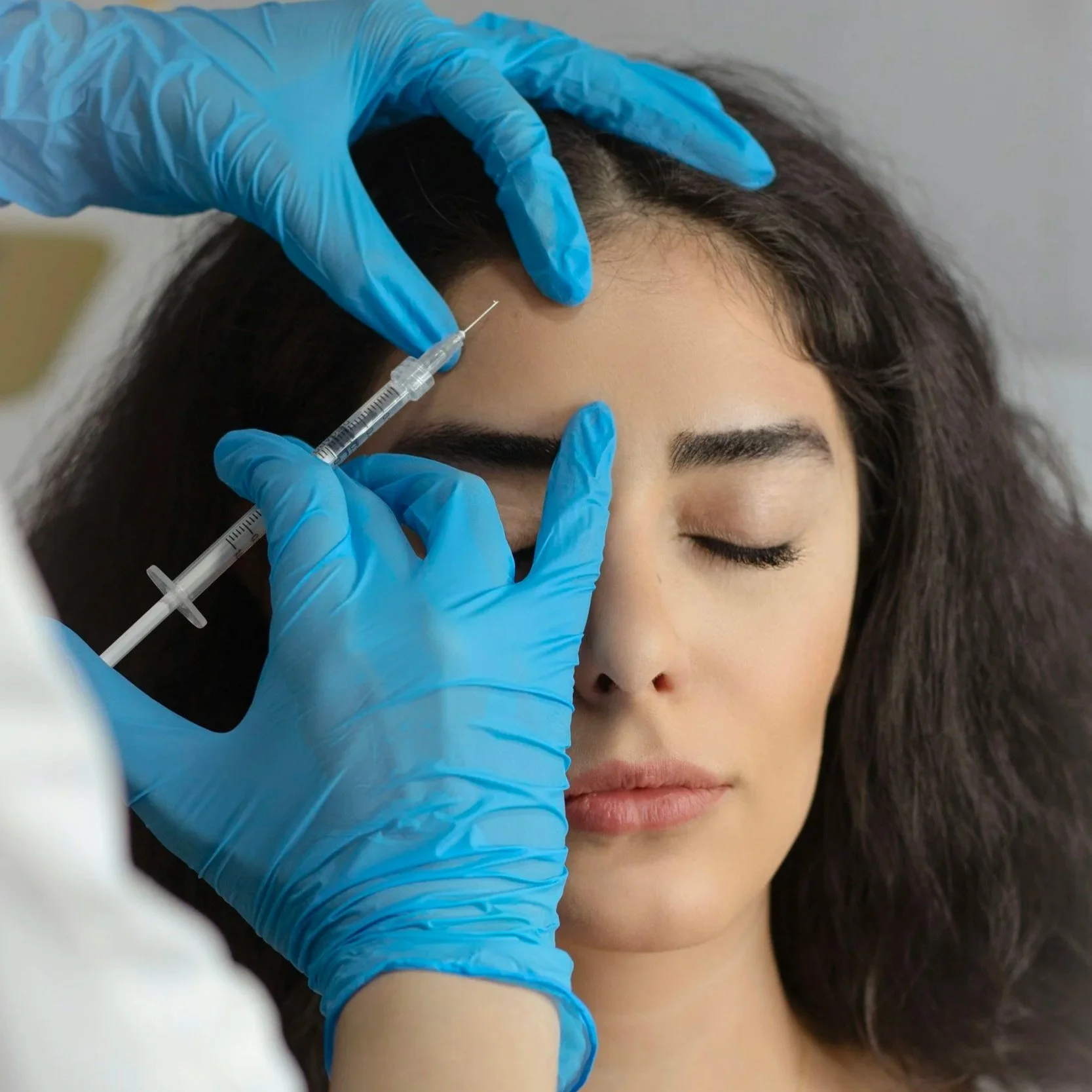
Neuromodulators like Botox, Letybo, and Dysport are the safest, most proven non-surgical option for preventing dynamic wrinkles and smoothing existing lines.
Botox is a brand name. The category is called neuromodulators, and several FDA-approved options exist.
The goal is a rested, natural appearance, not a frozen face.
Results take 3 to 7 days to appear and last 3 to 4 months on average.
Choosing an experienced injector matters more than which brand you receive.
Dr. Kim offers neuromodulator treatments at both his San Francisco and Alameda locations.
1. How Neuromodulators Work (The Science Is Simpler Than It Sounds)
The word "toxin" makes people nervous, and I understand why. Injecting something called a toxin into your face sounds counterintuitive at first. But neuromodulators have been used safely in medicine for decades, starting in ophthalmology for eye spasms before making their way into cosmetic use.
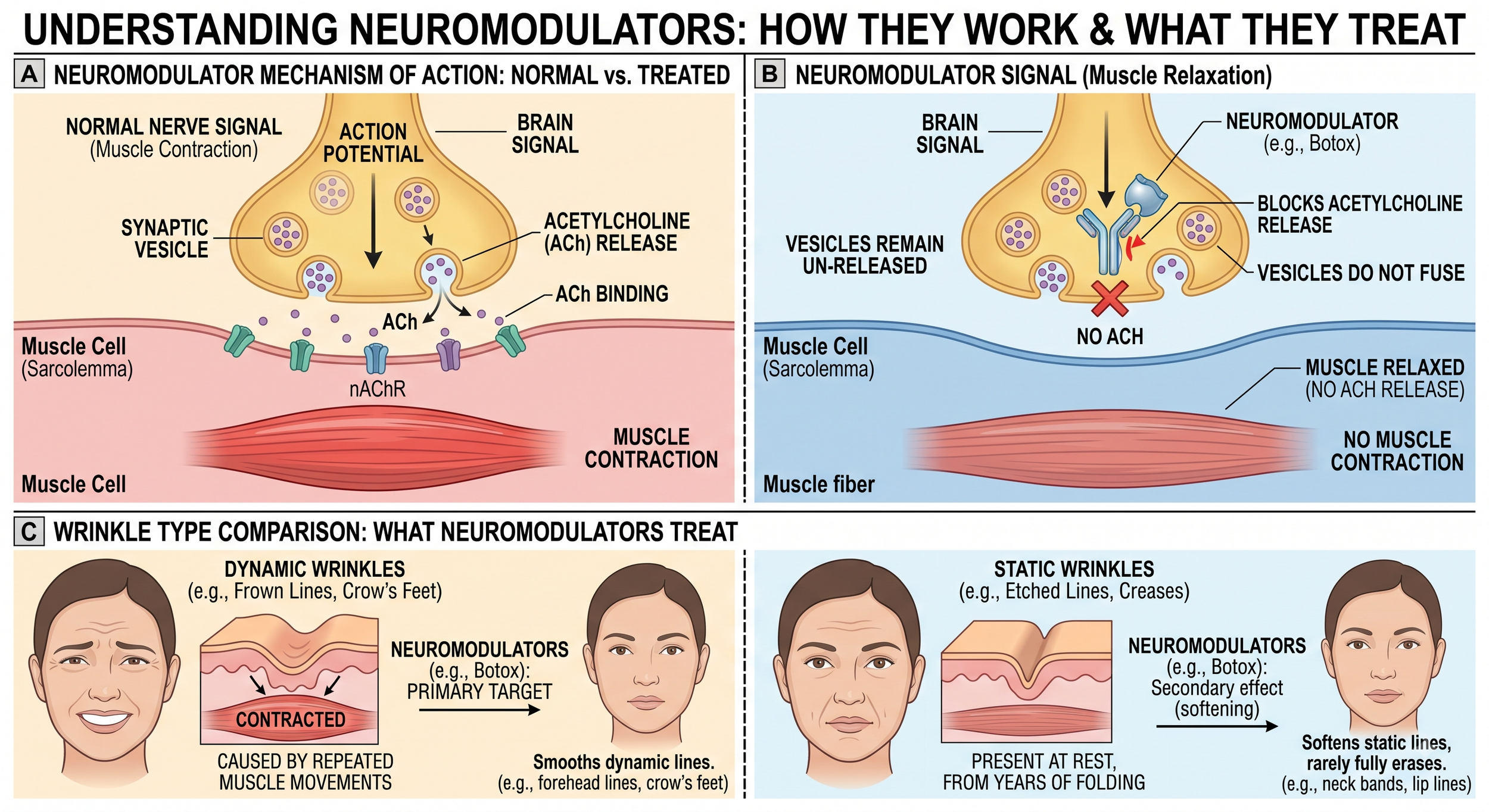
The mechanism is straightforward. Your brain sends a signal down a nerve to tell a facial muscle to contract, and at the end of the nerve, a chemical called acetylcholine releases to trigger the contraction. Neuromodulators block the release of acetylcholine, so the nerve fires, but the muscle stays relaxed. The skin lying over the relaxed muscle smooths out.
Wrinkles fall into two categories: dynamic and static. Dynamic wrinkles appear with movement, like the crow's feet you see when you smile or the "11s" between your brows when you frown. Static wrinkles are the ones you see at rest, creased into the skin from years of repeated folding.
Neuromodulators work best on dynamic wrinkles. They soften static wrinkles too, though they won't fully erase a deep line that's been etched in for twenty years.
I explain this distinction to every patient in my Alameda office because expectations drive satisfaction. If you've spent two decades squinting at screens in Silicon Valley, Botox alone won't make those crow's feet disappear like glass. It will stop the lines from getting deeper, and for the static component, we look at fillers or resurfacing.
2. The Neuromodulator Menu: Botox Is Not Your Only Option
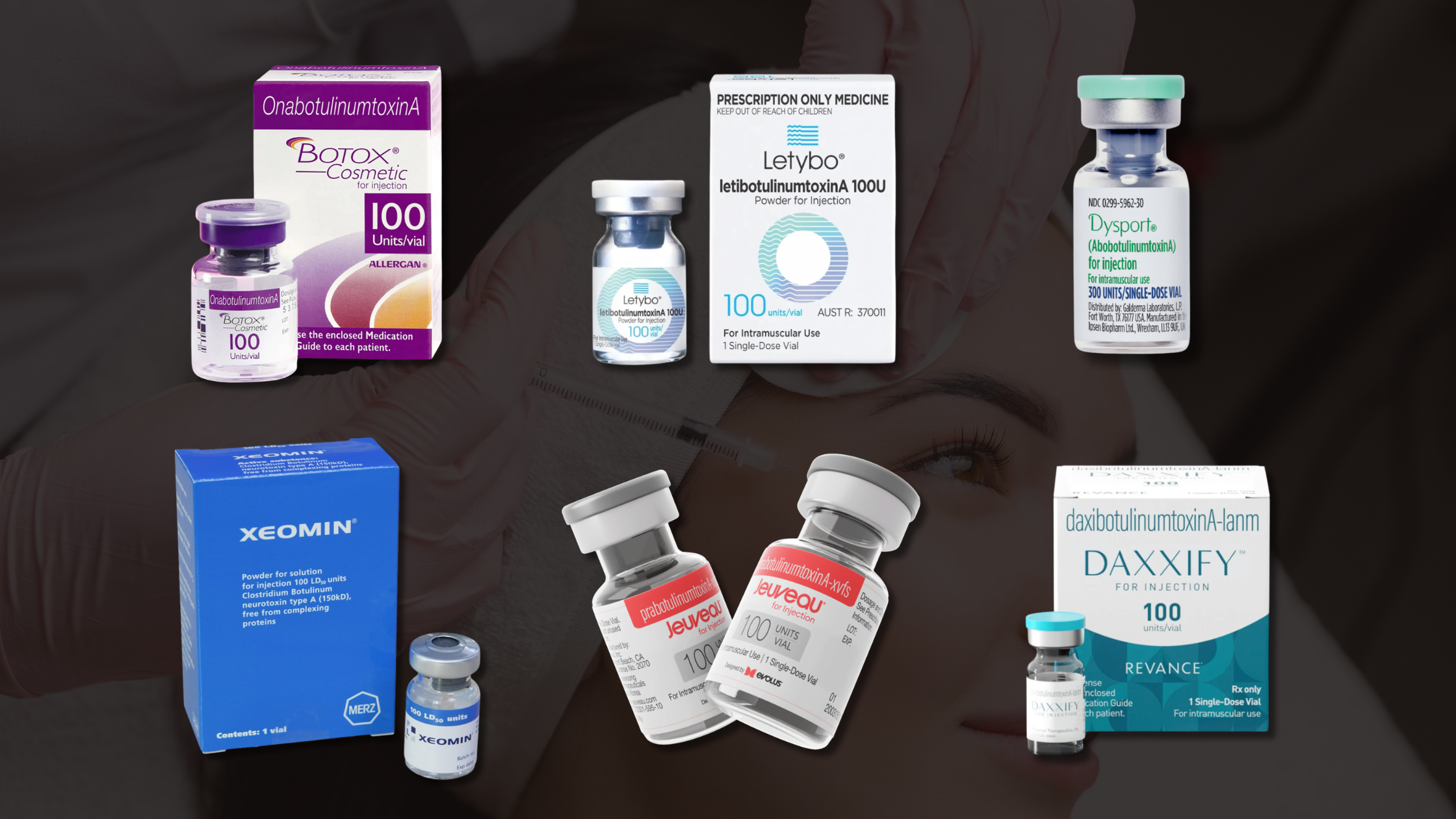
Patients walk in asking for Botox the same way people ask for a Kleenex or a Band-Aid. It's a brand name that became shorthand for an entire category. Today, I have six FDA-approved neuromodulators to choose from, and each one brings slight differences in formulation, onset, spread, and duration. Think of it like choosing between different brands of the same medication.
Botox (OnabotulinumtoxinA): The original and the most studied neuromodulator on the market. It works reliably, and the heavier protein complex in the formulation means it stays where I place it. This precision makes it my go-to for small, targeted areas like the glabella.
Letybo (LetibotulinumtoxinA): This is my preferred alternative to Botox. Letybo has a different protein structure from the other options, which matters for the small number of patients who develop antibody resistance to traditional formulations. It also comes at a lower price point, which makes it an attractive option for patients looking to maintain consistent treatments without paying top dollar every visit.
Dysport (AbobotulinumtoxinA): The protein molecules in Dysport are smaller, so it diffuses a bit more than Botox. I find this useful for the forehead, where a soft, even spread looks more natural than pinpoint precision. Some patients notice Dysport kicks in a day or two faster.
Xeomin (IncobotulinumtoxinA): Often called the "naked" neuromodulator because it contains no additive proteins, only the purified active molecule. This becomes relevant if your body develops resistance to other brands over time. It's rare, but when Botox or Dysport stop delivering results, Xeomin gives us a clean reset.
Jeuveau (PrabotulinumtoxinA): A newer entry marketed as "Newtox" and designed exclusively for cosmetic use. It's molecularly similar to Botox and often priced slightly lower.
Daxxify (DaxibotulinumtoxinA): The newest option. Daxxify uses a peptide exchange technology, and the headline claim is longer duration, with some patients seeing results last 6 months instead of the typical 3 to 4. It costs more per session, so the tradeoff is fewer visits against a higher per-treatment price.
I choose the product based on your anatomy, your muscle strength, and the area we're treating. Sometimes two patients sitting in the same waiting room at my Alameda office get two different products because their faces require different approaches. However, in general, I like Botox and Letybo, for their overall consistency and pricing.
3. The Alameda Look vs. the Instagram Look
Aesthetic preferences in the Bay Area differ from what you see in Los Angeles or Miami, and I've practiced here long enough to understand the distinction. My patients in Alameda, San Francisco, and across the East Bay tend to want results you feel more than see. They want to look well-rested, like they came back from a long weekend in Napa, not like they visited a plastic surgeon.
A fully frozen forehead looks unnatural because the face needs some movement to convey emotion. Eyebrows should still lift when you're surprised, and eyes should crinkle a bit when you laugh. Removing all movement flattens the face and strips away personality. I focus on conservative dosing for new patients, especially those coming in for the first time, because I'd rather start low and add a few units at a follow-up than overcorrect.
A patient from the Emeryville came in recently, worried about losing her ability to look stern in meetings. She needed to project authority, and a smooth, expressionless forehead would have undermined it. We started with a low dose in her glabella, targeting the deep frown lines while preserving her natural brow movement. The etched angry line softened, but she kept her range of expression. She walked out looking refreshed, not different.
This approach comes down to what I call the "refined" look. It preserves your character while removing the signs of fatigue and stress.
4. Beyond the Forehead: Where Else Neuromodulators Work
Most patients associate Botox with the upper face: forehead lines, frown lines, crow's feet. These remain the bread and butter of cosmetic neuromodulator treatments, but I use these products throughout the lower face and neck with excellent results.
Masseter Botox (Jaw Slimming)
The masseter is the large muscle responsible for chewing, and patients who grind their teeth or clench their jaw often develop a bulky, squared-off appearance through the lower face. Injecting the masseter relaxes it over time, and as the muscle atrophies from reduced activity, the face takes on a slimmer, more heart-shaped contour. This treatment also provides significant relief for TMJ-related pain and tension headaches.
The Nefertiti Lift (Neck Bands)
Stand in front of a mirror and grimace. If you see vertical bands popping along your neck, those are platysmal bands, and we treat them with targeted neuromodulator injections. Relaxing the platysma smooths the neck's appearance and delays the need for a surgical neck lift in some patients. I perform this frequently at my Alameda office for patients who notice early neck aging but aren't ready for surgery.
[LINK: What Is a Nefertiti Lift? Non-Surgical Neck Rejuvenation in the Bay Area]
Bunny Lines
These are the small diagonal wrinkles on the sides of the nose when you scrunch your face. Some patients develop prominent bunny lines after treating the forehead and glabella because the surrounding muscles compensate for the relaxed ones. A few units placed along the nose keeps the entire face balanced.
Chin Dimpling (Peau d'Orange/ Orange Peel)
Some patients notice their chin develops an orange-peel texture when they talk or purse their lips. This comes from an overactive mentalis muscle, and a small amount of neuromodulator smooths it out within a week.
Hyperhidrosis (Excessive Sweating)
This is a medical application, but I treat it often. Injecting the armpits blocks the nerve signal to the sweat glands, and the results are dramatic. I have patients who used to avoid certain fabrics entirely because of underarm sweating, and after treatment, the issue disappears for months. It's one of the most life-changing applications of neuromodulators I see in practice.

[READ HERE: Masseter Botox for Jawline Slimming]
Schedule Your Neuromodulator Consultation
Wondering which treatment areas would benefit your face? I offer personalized consultations at my Alameda office on Park Street and my San Francisco location near Union Square. Call 415-362-1846 to book your appointment.
5. What Happens During Your Appointment
Every neuromodulator appointment at my practice starts with a conversation, not a needle. I need to understand your history, including whether you've had injections before, how you responded, and what specifically bothers you when you look in the mirror. These details guide everything I do.
The examination happens while your face moves. I'll ask you to raise your brows, frown hard, and smile, because watching the muscles pull tells me where the dominant contractions are and where the asymmetries lie. Almost everyone has some degree of asymmetry, with one eyebrow sitting slightly higher or one side frowning more aggressively. I adjust dosing for each side independently.
After cleaning the skin with an antiseptic, I use the smallest gauge needle available. Most patients describe the sensation as a mild pinch, nothing close to a flu shot, and the actual injection portion takes about ten minutes. You'll notice small bumps at the injection sites afterward, similar to mosquito bites, but they flatten within 15 to 20 minutes. There's no downtime. You drive home to Alameda or head back to work in Oakland, and nobody knows you were here.
6. The Risks and Tradeoffs Worth Understanding
I believe in radical honesty with every patient. Neuromodulators are safe and well-studied, but this is still a medical procedure with real risks. Here's what I tell patients before we begin.
Bruising. The face is dense with small blood vessels, and even with careful technique, a tiny capillary gets nicked occasionally. The resulting bruise resolves within a few days. I recommend avoiding aspirin, ibuprofen, and fish oil supplements for a week beforehand because they thin the blood and increase bruising risk.
Headache. A mild headache the day after treatment is common and temporary. Over-the-counter acetaminophen handles it.
Ptosis (Droopy Eyelid). This is the complication everyone worries about. If the neuromodulator migrates to the levator muscle responsible for lifting the eyelid, the lid droops temporarily. It's uncommon in experienced hands and it's never permanent, resolving on its own as the product wears off. We also have prescription eye drops available to help lift the lid during the interim.
Spocking. When the central forehead relaxes but the lateral fibers stay active, the outer brows arch upward like Mr. Spock. It looks odd but it's an easy fix: a few units placed laterally at a follow-up appointment brings the brow back into balance.
Heavy Brow. This happens with poor placement or overdosing in the forehead, especially in patients with a naturally low brow position. The forehead feels weighed down, like wearing a baseball cap pulled too tight. It's the main reason I dose the forehead conservatively on a first visit.
7. Timing Your Treatments for the Best Results
Neuromodulators are not permanent. Your body metabolizes the protein, nerve endings regenerate, and the muscle gradually regains its movement. First-time patients typically see results hold for about 3 months. With consistent treatments over time, the muscle weakens from disuse and results begin to stretch closer to 4 months.
I tell patients to book their next appointment before they leave. Consistency matters because maintaining a steady treatment schedule means the muscle never fully reactivates, and over time, we often use fewer units per session. Patients who wait until wrinkles return completely are essentially starting over each visit.
For event planning, timing is everything. Do not schedule your first neuromodulator treatment two weeks before a wedding, a reunion, or a big presentation. Four weeks gives the product time to settle fully, allows any bruising to clear, and leaves a window for a touch-up if needed. Patients from the East Bay who are preparing for major events at venues in Napa or along the coast benefit from building in this buffer.
[READ HERE: Preparing for Your Wedding: A Timeline for Aesthetic Procedures]

8. Men and Neuromodulators (It's Not Called "Brotox" for Nothing)
The stigma around men getting cosmetic treatments is fading faster than a first-time Botox patient's crow's feet. I see an increasing number of male patients at both my San Francisco and Alameda locations, and their goals tend to be straightforward: look less angry, less tired, and more approachable.
Male anatomy requires a different injection approach. Men generally have stronger, thicker facial muscles, which means higher doses. They also have a naturally flatter brow, and if I inject a man the same way I inject a woman, the brow arches into a shape that reads as feminine. I keep injections lower on the male forehead and focus on maintaining the flat, horizontal brow line while softening the deep furrow between the eyes.
Many of my male patients work in tech and finance across the Bay Area, and a common concern is looking perpetually stressed or irritated in video calls and meetings. Softening the glabella removes the "resting angry face" without making any obvious change. Colleagues notice something is different, but they assume it's sleep or vacation, not a plastic surgeon's office in Alameda.
9. Why Bargain Botox Ends Up Costing More
Groupon deals, Botox parties, and med spas advertising prices that seem impossibly low have become common. Be careful with these offers.
Botox arrives as a freeze-dried powder and gets reconstituted with saline before injection. Unscrupulous providers dilute it beyond the recommended ratio, which means you're paying for 20 units but receiving the effective strength of 5 or 6. The result wears off in a month, and you're back paying again. Two diluted sessions cost more than one properly dosed treatment.
The other risk is anatomical knowledge. A weekend-course injector follows a template: the same injection points for every patient. But your face is not a template. Your muscle recruitment patterns, asymmetries, and skin thickness are unique. When you see a board-certified plastic surgeon, you're paying for the knowledge of what lies beneath the skin, not for the product itself. You're paying for a provider who knows how to avoid complications and who has the training to fix them if they arise.
Myth-Buster
Myth: If I stop using Botox, my wrinkles will come back worse than before.
Not true. Your wrinkles return to where they would have been without treatment, and in many cases they look slightly better because you paused the repetitive muscle contractions responsible for deepening the lines. You don't "lose ground" by stopping.
Myth: Botox is snake venom or rat poison.
It's a purified protein derived from a bacterium (Clostridium botulinum) and manufactured under strict pharmaceutical controls. The doses used in cosmetic treatments are a tiny fraction of what would cause any systemic effect.
Myth: I'm too young for neuromodulators.
Many patients in their late 20s and early 30s use low doses as a preventive measure, a concept called prejuvenation. It's easier to keep a crease from forming than to erase one that's been there for fifteen years. I see this frequently with younger patients from the East Bay who want to get ahead of aging rather than chase it.
Myth: It freezes your face instantly.
You walk out of the office looking exactly the same. The effects build gradually over 3 to 7 days as the product binds to the nerve endings. It's a slow fade, not a light switch.
Frequently Asked Questions
-
It depends entirely on your muscle strength and the area being treated. As a rough guide, glabella (frown lines) typically requires 20 to 30 units, the forehead runs 10 to 20 units, and crow's feet take 10 to 15 units per side. I determine exact dosing during your consultation based on how your muscles fire, and I don't upsell units you don't need.
-
Much less than a flu shot. A flu shot uses a larger needle going deep into your arm muscle, while neuromodulator injections use a needle about as thin as a hair going superficially into the facial muscles. Most patients describe it as a small pinch. I use ice or topical numbing cream for patients who are particularly nervous.
-
Wait 24 hours. Intense exercise raises blood pressure and increases blood flow, which raises the chance of bruising and theoretically allows the product to migrate before it fully binds to the nerve. A walk is fine. Skip the HIIT class for one day.
-
Neuromodulators relax muscles to treat lines caused by movement, primarily in the upper face. Fillers restore volume to treat lines caused by gravity and volume loss, like nasolabial folds and hollow cheeks. I often use both together for a balanced result, sometimes called a "liquid facelift."
-
I don't treat pregnant or breastfeeding patients with neuromodulators. No studies have demonstrated harm, but we don't run clinical trials on pregnant women for obvious ethical reasons, and the conservative approach is to wait.
-
Start with credentials. A board-certified plastic surgeon has the deepest training in facial anatomy of any provider offering injectables. Look at before-and-after galleries for results that look natural rather than overdone. And look for a provider who is willing to tell you "no" if a treatment isn't appropriate for your face. Providers who say yes to everything and pressure you to add on treatments are waving a red flag.
-
Not for cosmetic use. Insurance considers wrinkle treatment elective. If you have documented chronic migraines or severe hyperhidrosis, insurance sometimes covers the treatment through a medical authorization process, but this typically requires documentation from a neurologist or your primary care physician.
Summary
Neuromodulators remain the most effective non-surgical option for smoothing dynamic wrinkles and preventing new lines from forming. The product you receive matters less than the skill and anatomical knowledge of the person holding the syringe. Whether I'm reaching for Botox, Letybo, or Dysport, my focus is on placement, dosing, and preserving the natural movement of your face. In my practice, the best outcome is one nobody notices unless you tell them.
Book Your Consultation with Dr. Roy Kim
Ready to find out which neuromodulator treatment fits your goals? I see patients at two locations:
San Francisco: 450 Sutter Street, Suite 1440, San Francisco, CA 94108
Alameda: 1403 Park Street, Alameda, CA 94501
Call 415-362-1846 or email info@drkim.com to set up a time.
Follow and Connect with me on my social media!