
Can Botox Look Natural? An Alameda Plastic Surgeon Explains
Overview
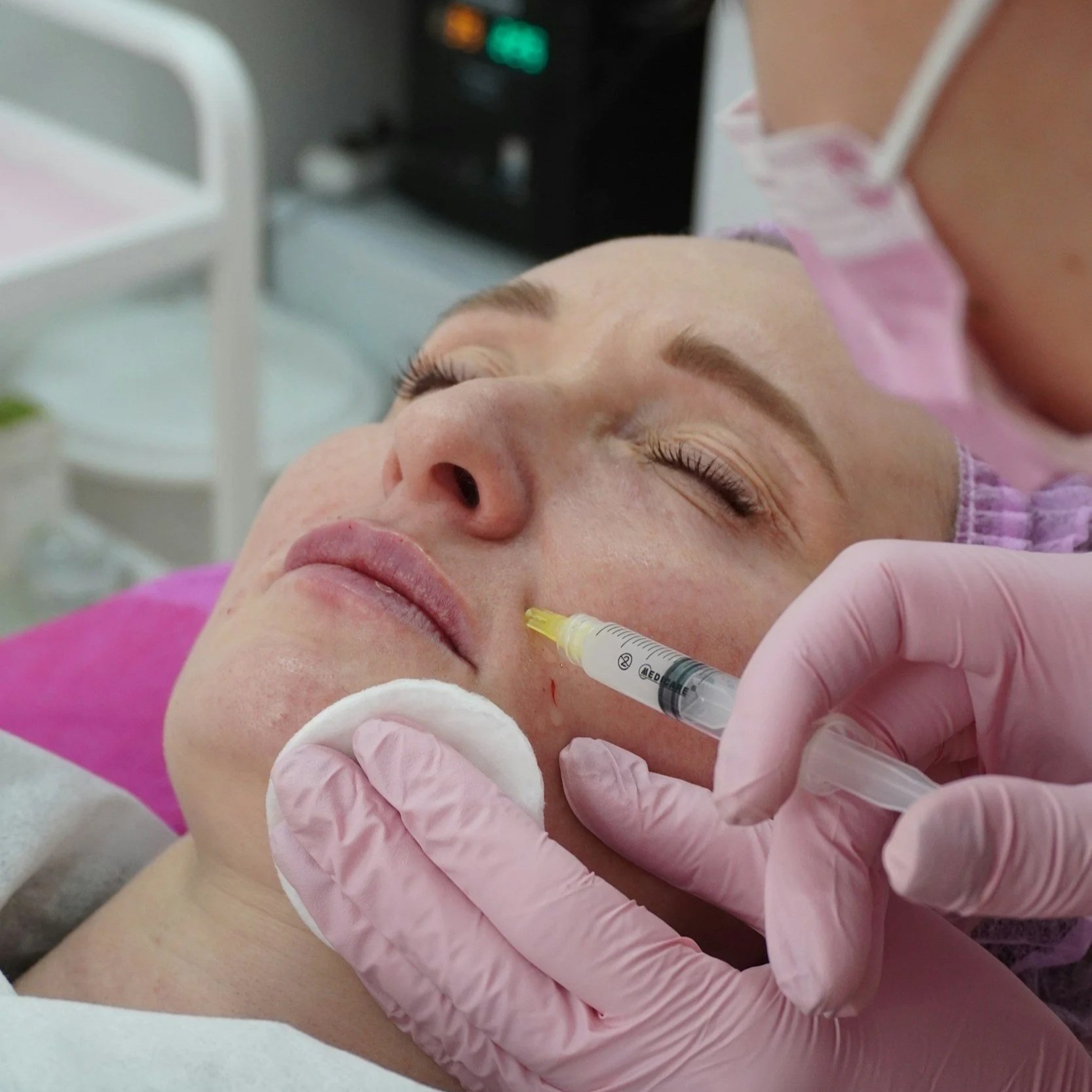
Natural Botox comes down to conservative dosing and precise placement, not freezing every muscle on your face. Most patients worry about looking plastic or expressionless, and I understand that fear. The strategy below is how I help Alameda patients look refreshed without looking overdone.
Start with a lower dose and build from there rather than overdoing it on the first visit
The goal is to soften movement, not eliminate it entirely
Your anatomy, skin thickness, and muscle strength all determine the right approach
An experienced injector treats the whole face as a connected system, not a wrinkle-by-wrinkle checklist

1. Why Every Face Responds Differently
Patients walk into my Alameda office and say the same thing: they want to look refreshed, not frozen. The fear of the permanently surprised celebrity face is real, and I take it seriously.
Your face is a system of muscles pulling in opposing directions. Some lift your brows, others pull them down, and the balance between them determines how you look at rest and in motion. If I knock out the elevators without accounting for the depressors below, your forehead drops. If I overtreat the depressors, you end up looking startled for three months.
The dose that works for a man with thick skin and strong corrugator muscles is completely different from what a woman with thin skin and fine lines needs. I treat patients from across the East Bay, from Oakland to Bay Farm Island, and no two faces get the same protocol.
A scenario I see frequently involves patients who went to a med spa with a one-size-fits-all protocol and received 20 units in the glabella (the frown area between the eyebrows) because a textbook said so, when they only needed 12. The result was heavy, drooping brows that lasted three months. In my practice, I customize the dose down to the unit.
2. What "Baby Botox" Means in Practice
You've seen terms like "Baby Botox" or "Micro-tox" on social media. These are marketing labels for a clinical concept I've used for decades: smaller amounts of neuromodulator that weaken the muscle without paralyzing it.
The goal is to soften the contraction so that when you frown, your brows still come together slightly, but the motion isn't strong enough to etch deep lines into your skin. This approach works well for patients in their late 20s or 30s who want to prevent static lines from forming while keeping full range of expression. You still need to show concern, surprise, and empathy with your face.
I had a patient last year, a healthcare administrator from Harbor Bay, who felt her deep frown lines made her look irritated in meetings even when she was calm. She was terrified of looking plastic. We used a scattered micro-dosing technique across her forehead and glabella, and she kept her expressions while the angry edge softened.
[READ HERE: What Is Preventive Botox and When Should You Start?]
3. Treating Crow's Feet Without Killing Your Smile
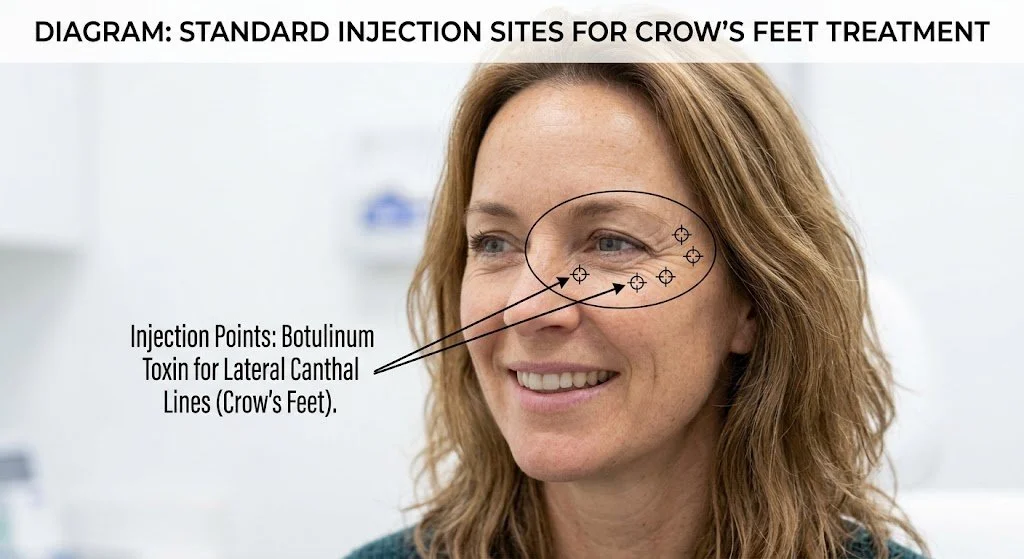
Crow's feet are the lines radiating from the corners of your eyes when you smile, and patients tend to despise them. But I defend some of that movement.
A genuine smile involves crinkling around the eyes. Neuroscientists call it the Duchenne marker, and our brains are wired to trust people whose smiles reach their eyes. If I freeze that area completely, your smile falls flat and reads as insincere to everyone around you.
My approach targets the tail of the orbicularis oculi muscle, placing the product low and lateral to soften the deep lines extending toward the cheeks while leaving the muscle fibers closer to the eye active. The result is a smile that lights up your face without makeup settling into grooves by mid-afternoon.
I treat teachers, therapists, and counselors across the East Bay whose jobs depend on nonverbal communication. A frozen eye area would undermine their ability to connect with students and clients, so we find a middle ground that softens lines without sacrificing expression.
[LINK: Botox for Crow's Feet: What to Know Before Your First Treatment]
Ready to see what subtle Botox looks like on your face? Call my Alameda office at 415-362-1846 to set up a consultation at 1403 Park Street.
4. The Honest Trade-Off of Subtle Results
If you choose the natural route, the results won't last quite as long as a heavy dose. A fully paralyzed muscle stays inactive for 3 to 4 months, while a partially treated muscle might start moving again in 2 to 2.5 months. This is the pharmacology of the product: lower doses get metabolized faster.
I explain this during every consultation because I want patients to make an informed choice. Most of my Alameda patients prefer looking natural and coming in three or four times per year over looking frozen for longer stretches.
Consistency pays off over time. When you maintain regular treatments, the muscles gradually lose their ability to contract as forcefully, and many patients eventually need less product to achieve the same result.
5. Frown Lines Without the Freeze
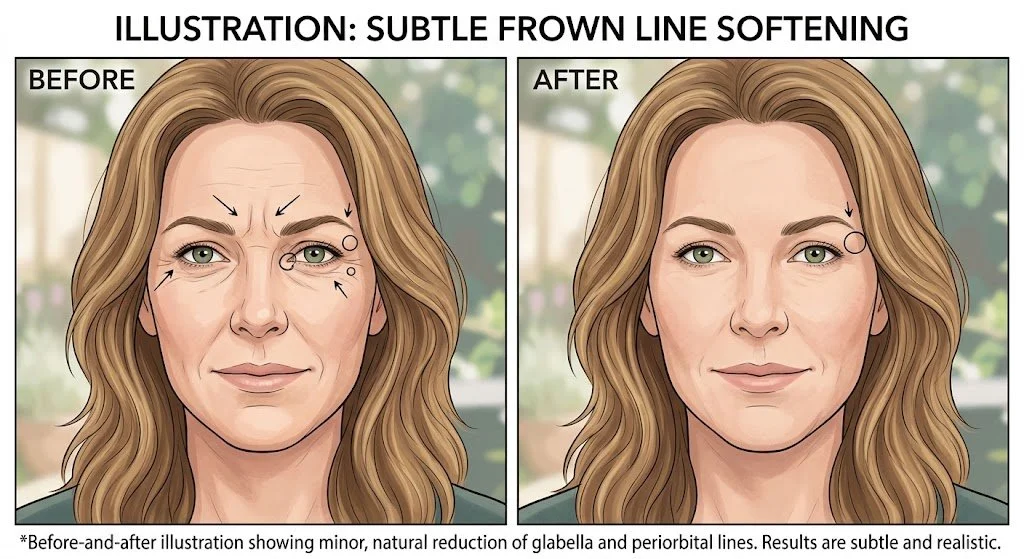
The glabella, or the "11s" between your eyebrows, is the single most requested treatment area and the easiest to overdo. Many injectors hit this zone aggressively to guarantee the lines vanish, but the frontalis muscle on your forehead often relies on the glabella muscles for brow support. If I freeze your frown lines completely, your forehead might feel heavy and your brows drop.
I take a tiered approach: I inject the corrugator muscles (the ones responsible for the frown) while staying away from zones that affect brow height, and I often ask patients to come back after two weeks so I have the option of adding a unit or two rather than overdoing it on day one. You don't get to undo Botox once it's in. A conservative start protects you from three months of regret.
Myths About Natural Botox
"Natural Botox means it won't work as well." Not true. It means the muscles are softened rather than paralyzed. The lines still improve, and you keep your ability to express emotions with your face.
"You need to freeze everything to prevent wrinkles long-term." Partial treatment prevents deep static lines from forming while preserving movement. Full paralysis isn't required for effective wrinkle prevention.
"Cheaper Botox gives the same results." The product matters less than the person injecting it. An experienced injector who understands facial anatomy will produce better outcomes with any neuromodulator than a less experienced provider using the same brand at a lower price.
Frequently Asked Questions
-
The best predictor is your injector's philosophy, not the product or the dose. During your consultation, ask about their approach to preserving movement. If the answer focuses on eliminating every line, you'll likely end up looking overdone. If they talk about softening movement and respecting your anatomy, you're in good hands.
-
It depends on how your provider charges. Most offices bill by the unit, so fewer units means a lower total. Some micro-dosing techniques require more time and precision, which factors into the fee. You're paying for clinical judgment and the outcome, not the volume of product in the syringe.
-
Botox stops the muscle from deepening those lines, but it doesn't fill existing grooves. For static wrinkles visible when your face is completely relaxed, we often combine neuromodulators with a laser treatment or a fine-line filler to address the skin's texture directly. We tackle the muscle first, then evaluate what the skin does on its own over a few weeks.
-
Both work well for subtle outcomes. Dysport tends to spread a bit more, which creates a softer, more diffuse effect across large areas like the forehead. Botox stays precisely where I place it, making it ideal for tight, targeted zones. I use both and choose the brand based on the specific area and the look we're working toward.
-
Expect to visit three to four times per year instead of two or three. The trade-off is more frequent appointments in exchange for results that look natural between visits. Over time, many patients find their maintenance frequency decreases as the muscles weaken from consistent treatment.
-
There's no wrong age for this approach. Patients in their late 20s use it preventively to stop deep lines from forming, while patients in their 60s use it to soften movement without looking artificial. The dosing and placement change with age, but the philosophy stays the same.
Summary
Natural-looking Botox isn't luck or genetics. It's a deliberate strategy built on understanding your anatomy, dosing conservatively, and accepting that some facial movement is what keeps you looking human. Whether you're softening frown lines or addressing crow's feet, the frozen look is always a choice, and it's one I won't make for you.
Schedule Your Consultation in Alameda
If you'd like to talk about what subtle, natural Botox looks like for your face, call 415-362-1846 or email info@drkim.com to set up a time.
San Francisco: 450 Sutter Street, Suite 1440, San Francisco, CA 94108
Alameda: 1403 Park Street, Alameda, CA 94501
Follow and Connect with me on my social media!