
Preventative Botox in Alameda: What Age Should You Start?
Overview
There's no magic birthday for starting preventative Botox. The right time depends on your skin, your genetics, and whether lines are starting to linger after your face relaxes.
Most patients see benefits when they begin in their mid-to-late 20s or early 30s, using lower doses to soften muscle movement without freezing expression.
Starting earlier typically means fewer units per session and longer intervals between visits, which adds up to less cost over time.
If you have zero visible lines at rest and thick, resilient skin, you likely don't need treatment yet.

1. Why Preventative Botox Looks Different on a 28-Year-Old
Patients walk into my Alameda office on Park Street holding celebrity photos, asking for that impossibly smooth forehead. I get it. But preventative neurotoxin treatment isn't about erasing twenty years of sun damage or chasing a filtered Instagram look. It's about stopping dynamic wrinkles from becoming permanent creases before they have a chance to set in.
Think of your skin like a crisp sheet of paper. Every time you smile, frown, or squint, you fold the paper in the same spot. Do it enough times, and a crease stays even after you lay the paper flat. Neurotoxins weaken the muscle contraction so you're not folding the paper as hard.
The strategy for someone in their late 20s looks nothing like what I'd plan for a patient in their late 50s. We're talking about 10 to 20 units placed with precision, using "Baby Botox" techniques that soften movement without paralyzing it. You should still look like yourself, still raise your eyebrows when you're surprised, still furrow your brow when you're concentrating. The goal is keeping your face dynamic while slowing the clock on permanent lines.
2. Three Factors I Evaluate Before Recommending Early Treatment
"Is 25 too young? Is 30 too late?" I hear some version of this question multiple times a week during consultations at my Alameda office. There's no universal rule, but I look at three specific things before making a recommendation.
Your genetic baseline. Look at your parents. If your mother developed deep static lines in her 30s, you're genetically predisposed to the same pattern. Genetics load the gun. Habits pull the trigger.
Your expressiveness. Some people talk with their hands, and others talk with their foreheads. I treated a 28-year-old software engineer who sat in front of a monitor all day and didn't think she was expressive at all. But when she concentrated, she scowled, and she'd been doing it eight hours a day for years. She had a deep "11" line forming between her brows because of that unconscious habit. For someone like her, starting early was the right clinical decision.
Your skin quality. Thinner, fairer skin tends to crease faster than thicker, oilier skin. If you spent your teenage years at Crown Beach or Robert Crown Memorial State Beach without SPF, your collagen has taken a hit, and you'll likely see fine lines forming earlier than someone who avoided prolonged sun exposure.
3. The "Makeup Test" and Other Warning Signs You're Ready
You don't need a medical degree to spot the early indicators. You know your face better than anyone, and there are two quick self-assessments I recommend to patients who aren't sure if it's time.
The first is what I call the "makeup test." Apply your foundation in the morning, then check it at lunch. If the makeup is settling into fine lines on your forehead or around your eyes, cracking into visible crevices, those lines are physically there. That's not a trick of the light.
The second test involves your resting face. Stand in front of a mirror, raise your eyebrows as high as they go, frown hard, smile big, and then let your face relax completely. Count to five. If faint lines remain on your skin after the muscles fully relax, those are static lines beginning to form. Once a line stays visible at rest, you've moved from prevention territory into correction territory, which means more units, higher costs, and often additional treatments like fillers or laser resurfacing to address the damage.
The sweet spot for preventative Botox is usually the moment those dynamic lines (the ones that appear with movement) start lingering for a few seconds too long after you stop moving.
If you're noticing these signs and want to explore your options, call my Alameda office at 415-362-1846 to set up a quick assessment.
4. The Financial Case for Starting Early
Preventative Botox gets criticized as spending money on a problem that doesn't exist yet. Fair enough on the surface. But the financial math tells a different story.
Treating a deep, etched-in wrinkle is expensive. Once collagen breaks down completely in a crease, neurotoxins alone won't fix it. You'll need filler to lift the depression, laser resurfacing to smooth the texture, and often a higher dose of Botox to suppress the muscle long enough for the skin to recover. That's $1,500 to $3,000 or more per correction session versus a few hundred dollars for a preventative maintenance visit.
I'm honest with patients about the commitment, though. Results last 3 to 4 months, so maintenance becomes a recurring line item in your budget. If you stop, your muscles regain their strength and the aging process picks up exactly where it left off. You won't age "faster" after stopping, but you do lose the pause button you pressed.
5. When I'll Tell a Patient "Not Yet"
I turn patients away, and it happens more often than you'd think. Sometimes a 19-year-old walks in because she saw a trend on social media. She has perfect, plump skin with zero lines even when she frowns hard. She wants "preventative" treatment because she's terrified of aging.
I won't treat her. Injecting a neurotoxin into a muscle that doesn't need it provides no benefit, exposes the patient to unnecessary cost and potential side effects, and crosses an ethical line I'm not willing to cross.
Body dysmorphia is a real concern in aesthetic medicine, and I screen for it. If a patient fixates on a flaw that's invisible to the naked eye, a needle isn't the answer. There's also a risk of "over-prevention." Starting too young with doses that are too high leads to brow dropping, a heavy-looking face on someone young, and muscle atrophy that makes the forehead look shiny and strange over time.
My goal is keeping you looking like you. I want people to tell you that you look rested, not that you have a great plastic surgeon. If you come to my Alameda office and I tell you to wait, please listen. I'm protecting your face and your wallet.
6. What Maintenance Looks Like for Younger Patients
Once we've decided you're a good candidate, the first session is always conservative. I prefer to undertreat slightly on the initial visit, because adding more at a follow-up is easy. Taking it out isn't.
For younger patients, I typically use 10 to 20 units instead of the standard 30 to 40 used for older patients who need deeper suppression. We'll target the glabella (frown lines) first and leave the forehead alone if it doesn't need attention, or sprinkle a small amount across horizontal lines if they're forming.
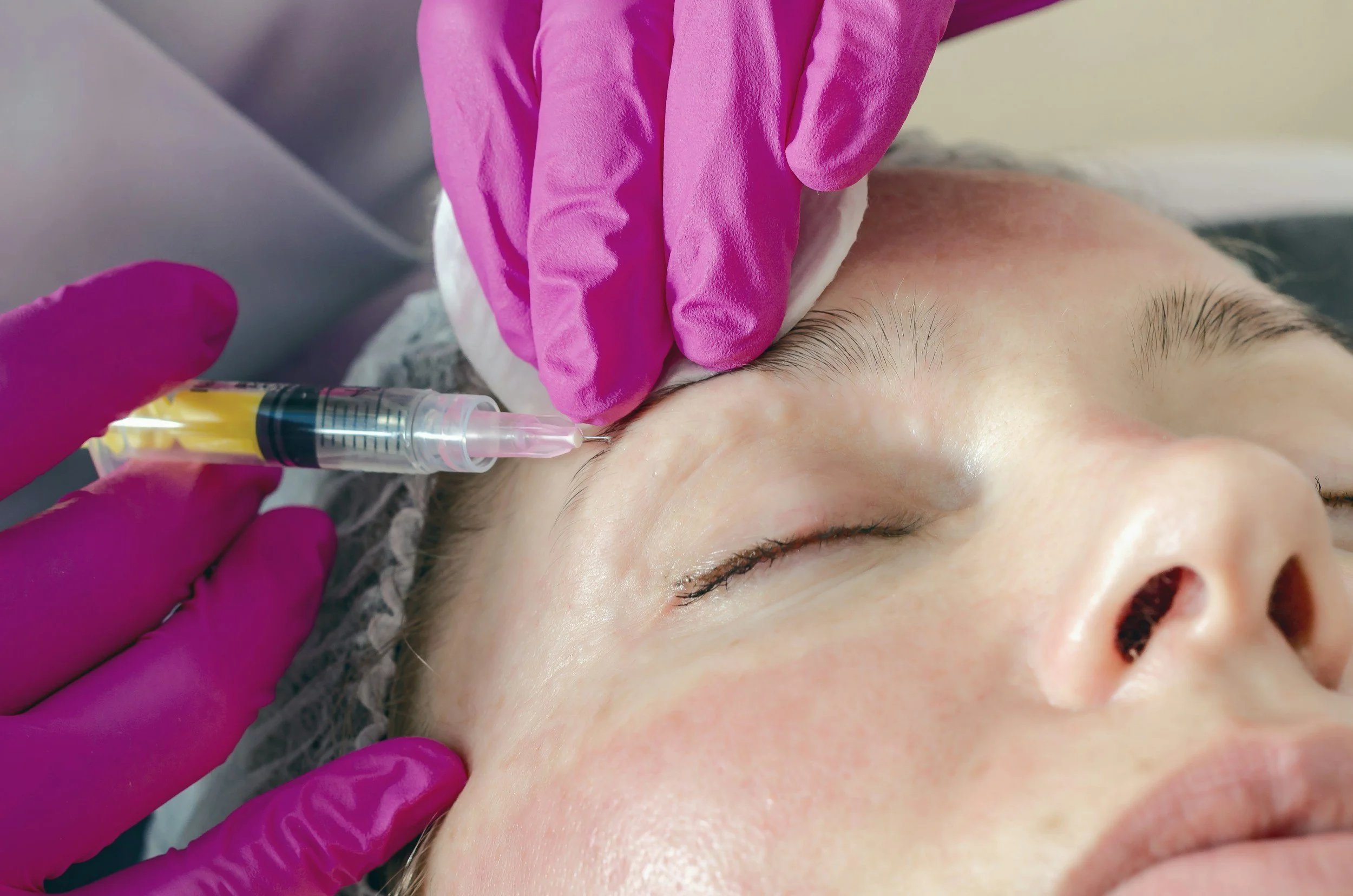
The injection process takes about ten minutes. It feels like a small pinch, and you go right back to grabbing lunch on Park Street or heading home afterward. Small red bumps at the injection sites fade within about 20 minutes. Results kick in between days 3 and 7, with the full effect hitting around the two-week mark.
For my younger patients, I often suggest coming in twice a year rather than every three months. Letting the movement return slightly between sessions keeps the muscles active enough to prevent atrophy but relaxed enough to slow down line formation.
Myths About Preventative Botox
"You'll age faster if you stop." This one refuses to die. If you stop getting injections, your muscles gradually regain their full strength and your face returns to its natural movement patterns. You don't suddenly develop all the wrinkles you "missed." You age normally from that point forward. You enjoyed a period where line formation was paused, so you're likely ahead of where you'd be if you'd never started.
"Botox at 25 is overkill." It depends entirely on the individual. A 25-year-old with deep "11" lines from years of unconscious frowning is a perfectly reasonable candidate for low-dose treatment. A 25-year-old with no visible lines isn't. Age alone tells me almost nothing.
"Preventative Botox will make you look frozen." Only if someone uses too many units, which is exactly why technique matters. Baby Botox uses micro-doses that soften muscle movement without eliminating it. Done right, nobody should be able to tell you've had anything done.
Frequently Asked Questions
-
It's the same medication, same molecule. "Baby Botox" refers to a technique where we use smaller doses distributed more broadly to retain natural movement while softening the skin. It gives an airbrushed finish rather than a frozen look.
-
Most patients rate the sensation as a 2 or 3 out of 10, comparable to plucking an eyebrow hair. Because preventative sessions often involve fewer injection points, the procedure tends to be quicker. I use extremely fine needles, and topical numbing cream is available if you want it, though most people skip it.
-
You're rarely "too late" to see improvement, but the goal shifts. If lines are visible when your face is completely relaxed, the strategy moves from pure prevention to prevention plus correction. Neurotoxins still help by keeping those lines from getting deeper, but erasing an established crease typically requires combining treatment with fillers, chemical peels, or resurfacing.
-
The most common areas for younger patients include:
Glabella (the "11" lines between your brows): the number one area I treat in patients under 30
Forehead: horizontal lines that appear when you raise your eyebrows
Crow's feet: fine lines at the outer corners of the eyes, especially in patients with thinner skin
-
For younger patients receiving preventative doses, I typically recommend every 4 to 6 months rather than the standard 3-month interval. Because we're using fewer units and the goal is to slow the muscle down rather than stop it entirely, results last a bit longer between sessions.
-
Daily SPF is the single most effective wrinkle-prevention tool at any age, and it costs a fraction of what neurotoxin treatments cost. Retinoids, antioxidant serums, and a consistent skincare routine all contribute to slowing collagen breakdown. For patients who aren't ready for neurotoxins or don't need them yet, I always start with these foundational habits first.
Summary
Preventative Botox isn't about your birthday. It's about your skin's individual timeline. When dynamic wrinkles start lingering after your face relaxes, that's the signal to have a conversation about treatment. Small doses placed with precision keep you looking natural and expressive while slowing the permanent line formation that becomes expensive to fix later. If you don't see those signs yet, enjoy your collagen and come back when your skin tells you it's time.
Schedule Your Preventative Botox Consultation in Alameda
If you're noticing the early signs of fine lines and want a board-certified plastic surgeon's honest opinion on whether preventative Botox makes sense for you, I'd like to see you in person.
San Francisco: 450 Sutter Street, Suite 1440, San Francisco, CA 94108
Alameda: 1403 Park Street, Alameda, CA 94501
Call 415-362-1846 or email info@drkim.com to set up a time.
Follow and Connect with me on my social media!